Disrupt or Be Disrupted: The 🦾 Robotics technology Manifesto for 2027
Disrupt or face obsolescence. Our 2027 robotics technology manifesto reveals key trends: AI, automation, and collaborative robots. Master the future of robotics now.
In the relentless march of technological progress, few domains demand as much strategic foresight and executive acumen as robotics. The year 2026 finds us at a pivotal inflection point: the global robotics market, projected to exceed $100 billion by 2027, is not merely growing; it is undergoing a profound metamorphosis. A critical, unsolved problem persists: how do organizations, from multinational conglomerates to agile startups, effectively navigate this accelerating landscape to harness the transformative power of advanced robotics technology without succumbing to the inherent risks of disruption and misinvestment? The prevailing challenge is not merely adopting robots, but integrating intelligent, autonomous, and collaborative systems into the very fabric of enterprise operations to unlock unprecedented levels of efficiency, innovation, and competitive advantage.
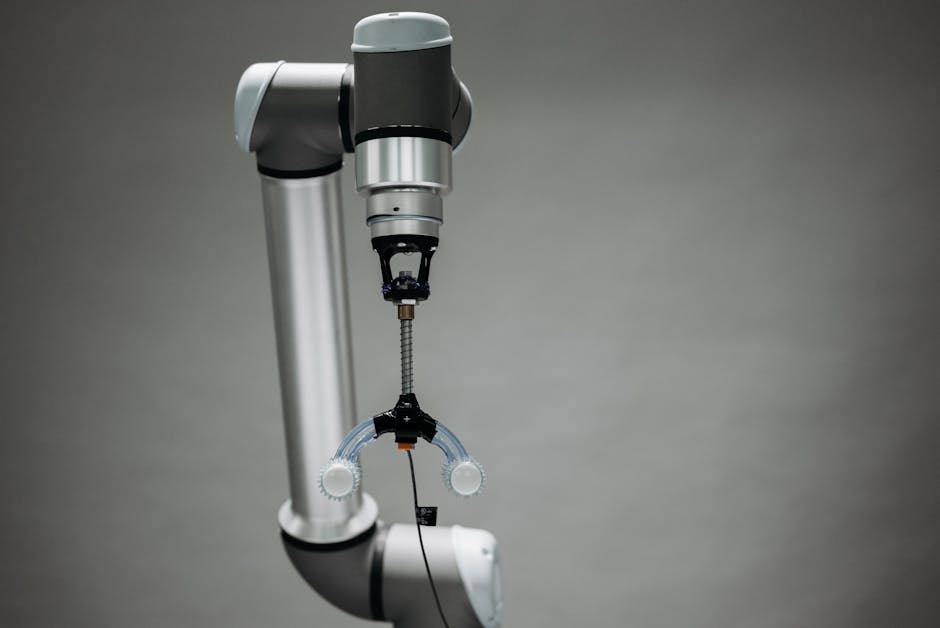
🎥 Pexels⏱️ 0:19💾 Local
This article addresses the strategic imperative for businesses to proactively engage with the next generation of robotics. The opportunity lies in moving beyond traditional automation to embrace intelligent automation, where robots, powered by advanced artificial intelligence and sophisticated sensors, become integral components of a dynamic, adaptive operational ecosystem. The problem is a potential chasm between technological capability and strategic readiness, leading to either reactive adoption or, worse, paralysis by analysis, ceding ground to more agile competitors.
Our central argument, therefore, is that a clear, data-driven, and forward-looking strategic manifesto for robotics technology adoption is no longer an option but a critical prerequisite for survival and prosperity in the impending economic landscape of 2027 and beyond. This article serves as that manifesto, providing a definitive, exhaustive, and authoritative guide for C-level executives, senior technology professionals, architects, lead engineers, researchers, and advanced students. It aims to equip leaders with the conceptual frameworks, practical methodologies, and critical insights necessary to strategically implement disruptive robotics solutions.
Over the subsequent sections, readers will embark on a comprehensive journey, beginning with the historical context and evolution of robotics, dissecting fundamental concepts and theoretical frameworks, and providing a granular analysis of the current technological landscape. We will delve into critical areas such as selection frameworks, implementation methodologies, best practices, and common pitfalls. Real-world case studies will illustrate theory in practice, while deep dives into performance optimization, security, scalability, and DevOps integration will provide actionable technical guidance. Furthermore, we will explore organizational impact, cost management, and the ethical considerations that underpin responsible innovation. The article culminates with an examination of emerging trends, future predictions, research directions, career implications, and an indispensable toolkit of FAQs, troubleshooting guides, and essential resources.
Crucially, what this article will not cover are deep, academic-level mathematical proofs for control theory or highly specialized robotic kinematics. While the underlying principles are acknowledged, the focus remains on the strategic application, engineering implementation, and business implications of robotics. The relevance of this topic in 2026-2027 is underscored by several converging forces: the exponential advancements in AI (especially generative AI and reinforcement learning), the maturation of sensor technologies, the proliferation of cloud robotics, the increasing demand for supply chain resilience, and evolving global regulatory landscapes concerning automation and human-robot interaction. These factors coalesce to create an unprecedented window of opportunity for organizations ready to lead rather than follow.
Historical Context and Evolution
Understanding the future of robotics technology necessitates a firm grasp of its past. The journey from rudimentary mechanisms to sophisticated autonomous systems is a testament to human ingenuity, marked by distinct eras of conceptualization, experimentation, and industrialization.
The Pre-Digital Era
Long before the advent of microprocessors, the concept of automation fascinated humanity. Ancient civilizations conceived of automatons and self-operating devices, from the mechanical birds of Alexandria to the intricate humanoid figures crafted by Arabic polymath Al-Jazari in the 12th century. The Renaissance saw Leonardo da Vinci sketch designs for a mechanical knight, while the 18th century brought Jacques de Vaucanson's mechanical duck, capable of eating, digesting, and excreting. These devices, while marvels of mechanical engineering, were pre-programmed, lacked sensory feedback, and operated within highly constrained environments. They represented the earliest aspirations for machines to mimic life and perform tasks without direct human intervention.
The Founding Fathers/Milestones
The true genesis of modern robotics began in the mid-20th century. George Devol is widely credited with inventing the first programmable robot, "Unimate," in 1954, for which he received a patent in 1961. Joseph Engelberger, often dubbed the "Father of Robotics," partnered with Devol to found Unimation Inc., the world's first robotics company. Unimate’s first commercial application was in a General Motors die-casting plant in 1961, performing hazardous tasks like extracting hot metal pieces. Concurrently, researchers like Grey Walter developed "tortoises"—simple electronic robots exhibiting complex emergent behaviors. At Stanford University, the Stanford Arm in 1969 marked a significant breakthrough in computer-controlled robotic manipulation, showcasing the potential for robots to perform more dexterous and adaptable tasks. These milestones laid the foundational groundwork for industrial automation.
The First Wave (1990s-2000s)
The 1990s and early 2000s witnessed the widespread adoption of industrial robots, primarily in manufacturing, particularly in the automotive sector. These were largely fixed-base, high-precision manipulators optimized for repetitive, high-volume tasks such as welding, painting, and assembly. Programming involved complex teach pendants and proprietary software, requiring specialized operators. Key characteristics included high speed, accuracy, and payload capacity. However, these robots were typically isolated in cages for safety, lacked sophisticated sensing capabilities, and were inflexible to task variations. Their limitations were evident in their inability to adapt to unstructured environments or interact safely with humans, hindering broader adoption beyond highly structured factory floors.
The Second Wave (2010s)
The 2010s ushered in a major paradigm shift, driven by advancements in sensor technology (e.g., LiDAR, sophisticated vision systems), computational power (Moore's Law), and artificial intelligence. This era saw the rise of Collaborative Robots (cobots), designed to work safely alongside humans without physical barriers. Companies like Universal Robots pioneered user-friendly interfaces, making programming more accessible. Concurrently, Autonomous Mobile Robots (AMRs) began to gain traction in logistics and warehousing, offering flexible material handling without the need for fixed infrastructure. The focus shifted from pure speed and strength to adaptability, ease of programming, and human-robot collaboration. This wave also saw the emergence of service robots in healthcare, hospitality, and even domestic settings, signaling a move beyond purely industrial applications.
The Modern Era (2020-2026)
The current era is defined by the convergence of advanced AI (machine learning, deep learning, reinforcement learning), ubiquitous connectivity (5G, cloud robotics), and increasingly sophisticated perception and manipulation capabilities. Robots are no longer just automated machines; they are becoming intelligent, learning, and semi-autonomous agents. This period is characterized by:
Hyper-automation: Orchestrating multiple technologies, including robotics, RPA, AI, and process mining, to automate end-to-end business processes.
AI-Driven Autonomy: Robots capable of complex decision-making, navigating dynamic environments, and performing intricate tasks with minimal human oversight.
Human-Robot Collaboration 2.0: Beyond cobots, this involves seamless, intuitive human-robot teams where each agent leverages its unique strengths.
Cloud Robotics: Leveraging cloud infrastructure for heavy computation, data storage, fleet management, and shared learning across robot fleets.
Digital Twins: Creation of virtual replicas of robots and their operational environments for simulation, optimization, and predictive maintenance.
Soft Robotics: The development of robots made from compliant materials, offering greater adaptability, safety, and dexterity for delicate tasks.
The modern era is rapidly pushing the boundaries of what robotics technology can achieve, moving towards general-purpose, highly adaptable, and intuitively programmable systems.
Key Lessons from Past Implementations
The journey of robotics has been rich with both triumphs and tribulations, offering invaluable lessons for current and future deployments:
Lesson 1: The Perils of Rigidity: Early industrial robots, while precise, were inherently inflexible. Any change in task or environment required extensive re-programming and re-tooling. Failure taught us that adaptability and flexibility are paramount for long-term value.
Lesson 2: Integration is Paramount: Standalone robots yield limited returns. True value emerges when robots are seamlessly integrated into existing workflows, data systems, and human teams. Success is replicated by holistic system design, not isolated deployments.
Lesson 3: Human-Centric Design: Neglecting the human element—safety concerns, job displacement fears, ease of interaction—can derail even the most advanced deployments. Successful implementations prioritize human-robot interaction, training, and change management.
Lesson 4: The Data Advantage: Modern robotics thrives on data—for perception, learning, and predictive maintenance. Insufficient data infrastructure or data quality limits AI-driven autonomy. Replicate success by establishing robust data pipelines and analytics capabilities.
Lesson 5: Total Cost of Ownership (TCO) Matters: Initial hardware cost is often a fraction of the TCO. Integration, programming, maintenance, energy, and downtime costs must be thoroughly evaluated. Avoid failures by comprehensive TCO analysis and long-term strategic planning.
Lesson 6: The Iterative Approach: Large, "big bang" deployments are risky. Starting small with pilots, learning, and iterating allows for risk mitigation and optimized scaling. Success is often built through agile, phased rollouts.
Lesson 7: Ethical Considerations are Not Afterthoughts: Ignoring societal impact, job displacement, bias, and accountability can lead to reputational damage and regulatory hurdles. Proactive ethical frameworks are essential for responsible and sustainable adoption.
Fundamental Concepts and Theoretical Frameworks
A rigorous understanding of robotics technology requires a solid grounding in its core terminology and the theoretical underpinnings that govern its design, control, and intelligence. This section provides an academic yet accessible overview.
Core Terminology
Robot: A re-programmable, multi-functional manipulator designed to move material, parts, tools, or specialized devices through variable programmed motions for the performance of a variety of tasks. (As per ISO 8373:2012).
Degrees of Freedom (DoF): The number of independent parameters that define the configuration of a mechanical system. For a robot arm, this typically refers to the number of joints.
End-Effector: A device or tool attached to the end of a robot arm, designed to interact with the environment (e.g., grippers, welders, cameras, drills).
Kinematics: The study of motion without considering the forces that cause it. In robotics, this involves calculating the position and orientation of the end-effector based on joint angles (forward kinematics) or determining joint angles needed to reach a desired end-effector pose (inverse kinematics).
Dynamics: The study of motion considering the forces and torques that cause it. Essential for understanding robot acceleration, deceleration, and interaction with loads.
Collaborative Robot (Cobot): A robot designed to physically interact with humans in a shared workspace, either in an assisting role or in close proximity, requiring specific safety features and standards (e.g., ISO 10218, ISO/TS 15066).
Autonomous Mobile Robot (AMR): A robot that navigates autonomously in its environment without the need for fixed paths or external guidance, using sensors (LiDAR, cameras) and AI for simultaneous localization and mapping (SLAM) and path planning.
Simultaneous Localization and Mapping (SLAM): A computational problem of constructing or updating a map of an unknown environment while simultaneously keeping track of an agent's location within it. Crucial for mobile robot autonomy.
Reinforcement Learning (RL): A type of machine learning where an agent learns to make decisions by performing actions in an environment to maximize a cumulative reward, often used for complex control tasks in robotics.
Digital Twin: A virtual representation of a physical object, system, or process, synchronized in real-time with its physical counterpart, enabling simulation, analysis, monitoring, and predictive capabilities for robots.
Teleoperation: The control of a robot from a distance, typically by a human operator, often employing haptic feedback and real-time video feeds for enhanced situational awareness.
Swarm Robotics: The study of how large numbers of relatively simple robots can collectively achieve complex tasks through local interactions and distributed control, inspired by social insects.
Robot Operating System (ROS): An open-source, meta-operating system for robots, providing libraries, tools, and conventions for building robot applications, facilitating interoperability and modular design.
Actuator: A component of a machine that is responsible for moving and controlling a mechanism or system, for example, by converting electrical energy into mechanical force (e.g., motors, pneumatic cylinders).
Sensor: A device that detects and responds to some type of input from the physical environment (e.g., cameras, LiDAR, force-torque sensors, encoders) and converts it into data for the robot's control system.
Theoretical Foundation A: Control Theory
Control theory is the mathematical framework for designing systems that regulate their behavior, a cornerstone of robotics technology. At its core, control theory enables robots to execute desired motions, maintain stability, and interact with their environment predictably.
Feedback Control: The fundamental principle is feedback, where a system's output is measured and compared to a desired setpoint. The difference (error) is then used to adjust the system's input. For example, a robot arm trying to reach a specific position uses sensor data (e.g., joint encoders) to measure its current position, compares it to the target, and adjusts motor commands accordingly.
PID Controllers: Proportional-Integral-Derivative (PID) controllers are ubiquitous in robotics. They calculate an error signal and apply a control action based on three terms:
Proportional (P): Proportional to the current error. A larger error leads to a stronger corrective action.
Integral (I): Proportional to the accumulation of past errors. Helps eliminate steady-state errors.
Derivative (D): Proportional to the rate of change of the error. Damps oscillations and improves stability.
The mathematical basis involves tuning these three gains ($K_p$, $K_i$, $K_d$) to achieve optimal response, balancing responsiveness, stability, and overshoot.
Adaptive Control: More advanced control strategies, such as adaptive control, allow robots to adjust their control parameters in real-time to compensate for uncertainties or changes in the robot's dynamics or environment (e.g., changes in payload). This is crucial for robots operating in dynamic, unstructured settings.
Model Predictive Control (MPC): MPC uses a dynamic model of the robot and its environment to predict future behavior. It then optimizes a sequence of control actions over a prediction horizon to satisfy constraints and achieve objectives, recalculating at each time step. This provides robust control for complex, constrained tasks.
Theoretical Foundation B: Artificial Intelligence and Machine Learning
AI, particularly machine learning (ML), is the intelligence behind modern robotics technology, enabling perception, cognition, and decision-making far beyond pre-programmed routines.
Perception (Computer Vision, Sensor Fusion):
Computer Vision: Deep learning models (Convolutional Neural Networks - CNNs) excel at object detection, recognition, segmentation, and pose estimation from camera data. This allows robots to "see" and understand their environment, identify objects to manipulate, and recognize humans.
Sensor Fusion: Combining data from multiple sensor modalities (e.g., cameras, LiDAR, radar, force sensors) using techniques like Kalman filters or extended Kalman filters to create a more robust and accurate understanding of the robot's state and environment, compensating for individual sensor limitations.
Cognition (Path Planning, Decision Making):
Path Planning: Algorithms like A*, RRT (Rapidly-exploring Random Tree), or sampling-based planners use environmental maps and obstacle information to compute collision-free trajectories for mobile robots or manipulation paths for robot arms.
Reinforcement Learning (RL): For complex, dynamic tasks where explicit programming is difficult (e.g., grasping novel objects, learning locomotion), RL allows robots to learn optimal policies through trial and error, guided by a reward function. Deep Reinforcement Learning (DRL) combines RL with deep neural networks to handle high-dimensional sensory inputs.
Behavior Trees/State Machines: For more structured, rule-based decision-making, robots often employ hierarchical control architectures combining state machines (for sequential execution) and behavior trees (for more complex, conditional behaviors and parallel execution).
Manipulation and Grasping: Leveraging ML, robots can learn to grasp objects of varying shapes, sizes, and textures, even in cluttered environments, by training on large datasets of successful grasps or through simulation-to-real transfer with RL.
Conceptual Models and Taxonomies
To systematically categorize and understand the diverse landscape of robotics technology, conceptual models and taxonomies are essential. These help in discerning functionalities, applications, and levels of autonomy.
Humanoid Robots: Designed to resemble the human body, capable of bipedal locomotion and human-like manipulation.
Levels of Autonomy (Adapted from SAE J3016 for vehicles):
Level 0 (No Automation): Robot executes only direct human commands.
Level 1 (Driver Assistance/Operator Assistance): Robot assists with specific functions (e.g., collision avoidance, basic path following), but human remains in full control.
Level 2 (Partial Automation): Robot performs multiple control functions simultaneously (e.g., speed and steering), but human must monitor and intervene.
Level 3 (Conditional Automation): Robot handles all aspects of dynamic task performance under certain conditions; human intervention is only required when prompted.
Level 4 (High Automation): Robot handles all aspects of dynamic task performance, even if a human does not respond appropriately to a request for intervention. Operates within defined operational design domains (ODD).
Level 5 (Full Automation): Robot performs all tasks under all conditions. Truly generalized intelligence, akin to human capability.
Robot Architecture Models:
Sense-Plan-Act (SPA): Traditional sequential model where the robot first perceives, then plans an action, then executes. Can be slow and brittle in dynamic environments.
Subsumption Architecture: Reactive, behavior-based approach where higher-level behaviors can "subsume" or override lower-level behaviors. Good for rapid response in dynamic environments, but harder for complex planning.
Hybrid Architectures: Combine elements of both deliberative (SPA) and reactive (subsumption) approaches, offering both robustness and goal-directed behavior. Most modern complex robots use some form of hybrid architecture.
First Principles Thinking
Applying first principles thinking to robotics technology involves deconstructing robots into their fundamental, irreducible components and truths. This approach helps in understanding current limitations and envisioning future breakthroughs.
Perception: A robot must be able to acquire and interpret information about its internal state and its external environment.
Fundamental Truth: Information acquisition is inherently imperfect (sensor noise, occlusion, limited range). Interpretation requires models (physical, statistical, learned) that are never fully complete or perfectly accurate.
Implication: Robust robots must cope with uncertainty and incomplete information, often through sensor fusion and probabilistic reasoning.
Cognition/Intelligence: A robot must be able to process perceived information, make decisions, plan actions, and learn from experience.
Fundamental Truth: Decision-making is based on goals, constraints, and predictive models. Planning is a search problem. Learning requires data and iterative refinement.
Implication: The "intelligence" of a robot is directly tied to the quality of its internal models, its ability to reason under uncertainty, and its capacity for continuous learning. General intelligence remains a distant goal due to the vastness of common sense knowledge.
Action/Actuation: A robot must be able to physically interact with its environment to effect change or move.
Fundamental Truth: Physical interaction is governed by physics (forces, torques, friction, material properties). Actuators have limits (power, speed, precision).
Implication: Dexterity and robust manipulation require precise control over forces and compliance, often difficult with rigid actuators. The future lies in more compliant, soft robotics and advanced control algorithms that can adapt to varying physical properties.
Communication: A robot must be able to communicate with other robots, humans, and centralized systems.
Fundamental Truth: Communication is inherently lossy, delayed, and bandwidth-limited. Interoperability requires common protocols and semantic understanding.
Implication: Robust multi-robot systems and human-robot collaboration rely on resilient communication architectures and standardized data exchange formats.
By dissecting robotics into these fundamental truths, we can identify core challenges, understand why certain problems are hard, and envision innovative solutions that transcend incremental improvements.
The Current Technological Landscape: A Detailed Analysis
The robotics technology landscape in 2026 is characterized by rapid innovation, diversification across industries, and the pervasive influence of artificial intelligence. This section provides a granular analysis of the market, key solution categories, comparative technologies, and emerging disruptors.
Market Overview
The global robotics market is experiencing exponential growth, driven by labor shortages, the demand for increased productivity, enhanced safety, and the maturation of AI and sensor technologies. According to recent market analyses (e.g., IFAC, Mordor Intelligence, Statista data projected for 2027), the market is anticipated to reach well over $100 billion, with some estimates pushing towards $200 billion when factoring in software, services, and integration. Key growth drivers include:
Industrial Automation: Continued expansion beyond automotive into electronics, food & beverage, logistics, and pharmaceuticals.
Service Robotics: Significant growth in professional service robots for logistics, healthcare, agriculture, and defense, alongside a steady increase in domestic robots.
AI Integration: The ability of robots to perceive, learn, and adapt is unlocking new application areas and enhancing existing ones.
Collaborative Robotics: Lower entry barriers, ease of programming, and inherent safety are accelerating cobot adoption across SMEs.
Geographic Expansion: While Asia (particularly China, Japan, Korea) remains the largest market, Europe and North America are also seeing substantial investment, particularly in advanced manufacturing and logistics.
Major players like Fanuc, Kuka (now Midea Group), ABB, Yaskawa, and Kawasaki continue to dominate the traditional industrial robotics sector. However, a new wave of companies like Universal Robots (cobots), Boston Dynamics (legged robots), Locus Robotics (AMRs), and numerous specialized startups are reshaping the competitive landscape, emphasizing flexibility, intelligence, and ease of deployment.
Category A Solutions: Advanced Industrial Automation Robotics
This category encompasses the highly sophisticated, typically fixed-base robotic manipulators used in manufacturing and heavy industry, but with significant modern enhancements.
Multi-Axis Articulated Robots: Ranging from 4 to 7 DoF, these robots are the workhorses of modern factories. They excel in tasks requiring high precision, speed, and payload capacity such as welding, painting, assembly, material handling, and machine tending. Modern iterations are equipped with advanced force-torque sensors for precision feedback, integrated vision systems for quality control, and sophisticated control algorithms that allow for dynamic path planning and collision avoidance, even with moving targets.
SCARA (Selective Compliance Assembly Robot Arm) Robots: Known for their high speed and precision in horizontal plane movements, SCARAs are ideal for pick-and-place, assembly, and packaging tasks in electronics and consumer goods manufacturing. Recent advancements include faster cycle times, enhanced vision integration for component sorting, and improved software for rapid reprogramming.
Delta Robots (Parallel Robots): These robots offer ultra-high speed for light-payload pick-and-place operations, particularly in food processing and pharmaceutical packaging. Their parallel kinematic structure provides inherent rigidity and allows for rapid acceleration and deceleration. AI-driven vision systems now enable them to handle highly variable product placements and types with minimal human intervention.
Automated Guided Vehicles (AGVs) & Autonomous Mobile Robots (AMRs): While AGVs follow fixed paths (tapes, wires), modern AMRs represent a significant leap. They navigate dynamically using SLAM, LiDAR, cameras, and AI, allowing them to adapt to changing environments, avoid obstacles, and optimize routes in real-time. This flexibility makes them indispensable for intralogistics, material transport in factories, and warehouse automation, significantly reducing reliance on fixed infrastructure.
Category B Solutions: Collaborative Robotics (Cobots)
Cobots are defining the next frontier of human-robot interaction in manufacturing and service industries. Their design philosophy centers on safety, ease of use, and adaptability, enabling human-robot collaboration (HRC).
Force/Torque Sensing: A primary safety mechanism, cobots use sensors in their joints or end-effectors to detect unexpected contact with humans or objects. Upon sensing a collision, they immediately stop or reduce force, adhering to ISO/TS 15066 safety standards.
Intuitive Programming: Unlike traditional robots, cobots often feature "teach-mode" or "lead-through" programming, where an operator physically moves the robot arm to desired positions, which are then recorded. Graphical user interfaces (GUIs) and app-based programming further simplify deployment, making them accessible to non-expert users.
Flexible Deployment: Their relatively light weight and smaller footprints allow cobots to be easily moved and redeployed for different tasks, offering unparalleled flexibility in dynamic production environments or for batch manufacturing.
Diverse Applications: Cobots are increasingly used for tasks like assembly, machine tending, quality inspection, packaging, polishing, and even simple surgical assistance. Their ability to work alongside humans enhances productivity by offloading repetitive or ergonomically challenging tasks, allowing human workers to focus on higher-value activities.
AI-Enhanced Collaboration: Emerging cobots integrate advanced AI for improved perception, enabling them to understand human intent, predict human movements, and adapt their actions for smoother, more efficient collaboration. This leads to truly intelligent human-robot collaboration.
Category C Solutions: Service and Specialized Robotics
This diverse category encompasses robots designed for specific tasks outside traditional manufacturing, often operating in complex, unstructured environments.
Logistics and Warehouse Robots: Beyond AMRs, this includes automated storage and retrieval systems (AS/RS), robotic piece-picking systems, and drone-based inventory management. These systems utilize advanced computer vision and manipulation to handle vast inventories, optimize storage, and fulfill orders with high speed and accuracy, addressing the demands of e-commerce.
Healthcare Robots:
Surgical Robots: Systems like the da Vinci Surgical System enhance precision and control for surgeons, leading to minimally invasive procedures.
Rehabilitation Robots: Assist patients with physical therapy and movement training.
Hospital Logistics: Robots for delivering medication, meals, and medical supplies, reducing staff workload.
Disinfection Robots: Autonomous robots using UV-C light or chemical sprays for sanitization, particularly relevant post-pandemic.
Agriculture Robots (Agri-Robotics): Autonomous tractors, weeding robots using computer vision for precise herbicide application or mechanical removal, harvesting robots for delicate crops, and drones for crop monitoring and spraying. These address labor shortages and promote sustainable farming practices.
Inspection and Maintenance Robots: Drones for inspecting infrastructure (bridges, pipelines, power lines), legged robots (e.g., Boston Dynamics Spot) for hazardous environment inspection (nuclear plants, construction sites), and underwater ROVs for subsea pipeline and cable inspection. They improve safety and efficiency by accessing dangerous or hard-to-reach areas.
Soft Robotics: An emerging field focused on robots made from compliant, flexible materials. These robots are inherently safer for human interaction, more adaptable to irregular shapes, and ideal for delicate manipulation tasks (e.g., handling soft fruits, medical procedures). They leverage principles of bio-inspiration and advanced material science.
Comparative Analysis Matrix
A structured comparison highlights the trade-offs and suitability of different robotics technology solutions for various applications. This table focuses on typical characteristics and capabilities in 2026-2027.
The choice between open-source and commercial robotics technology platforms is a critical strategic decision, each presenting distinct advantages and trade-offs.
Open Source (e.g., Robot Operating System - ROS/ROS 2):
Advantages:
Cost-Effectiveness: Free to use, reducing initial software licensing costs.
Flexibility & Customization: Access to source code allows for deep customization and integration with proprietary hardware/software.
Community Support: Large, active global developer community provides extensive resources, forums, and pre-built packages.
Interoperability: Promotes standardization and easier integration of components from different vendors.
Innovation: Rapid development cycles driven by community contributions.
Disadvantages:
Steep Learning Curve: Requires significant internal expertise for setup, maintenance, and troubleshooting.
Lack of Commercial Support: Formal vendor support is often absent or comes from third-party integrators.
Stability & Quality: Code quality can vary; robust, production-grade deployments may require substantial internal testing and hardening.
Security Concerns: Open nature can present security vulnerabilities if not properly managed.
Reliability & Stability: Typically undergo rigorous testing and quality assurance by vendors.
Dedicated Support: Access to direct technical support, maintenance contracts, and warranties from the vendor.
Ease of Use: Often come with user-friendly interfaces, extensive documentation, and pre-built solutions for common tasks.
Performance Optimization: Optimized for specific hardware, potentially offering superior performance.
Security: Vendors often provide robust security features and updates.
Disadvantages:
High Cost: Significant upfront licensing fees and recurring maintenance costs.
Vendor Lock-in: Limited flexibility and customization, making it difficult to switch vendors or integrate with non-proprietary systems.
Slower Innovation: Tied to vendor release cycles, potentially slower to adopt cutting-edge advancements.
Limited Transparency: Closed-source nature makes debugging and deep customization challenging.
Hybrid Approaches: Many organizations leverage the best of both worlds, using ROS for higher-level applications, sensor integration, and research, while relying on commercial proprietary controllers for low-level, high-performance robot control. This approach requires careful architectural planning and robust integration interfaces.
Emerging Startups and Disruptors
The robotics landscape is a fertile ground for innovation, with numerous startups pushing boundaries and challenging incumbents. These companies often focus on niche applications, leveraging advanced AI, novel hardware designs, or disruptive business models. In 2027, watch for disruptors in:
General-Purpose Humanoid Robotics: Companies like Figure AI, Sanctuary AI, and Agility Robotics are developing humanoids capable of performing a wide range of tasks in diverse environments (warehouses, retail, homes). Their focus on embodied AI and dexterous manipulation could fundamentally change labor markets.
Advanced Dexterous Manipulation: Startups specializing in robotic hands and manipulators that can handle highly varied, delicate, or deformable objects, addressing long-standing challenges in logistics and manufacturing (e.g., RightHand Robotics, Covariant.ai).
AI-Driven Robot Orchestration & Fleet Management: Companies providing sophisticated software platforms that manage large fleets of heterogeneous robots, optimize task allocation, and enable seamless human-robot collaboration across an entire facility or supply chain.
Robotics-as-a-Service (RaaS): Business models that lower the entry barrier for robotics adoption by offering robots and their services on a subscription basis, shifting from CapEx to OpEx. This is particularly attractive for SMEs (e.g., Locus Robotics, inVia Robotics).
Bio-Inspired and Soft Robotics: Firms exploring novel materials and designs for robots that mimic biological systems, offering greater adaptability, safety, and energy efficiency for specific applications (e.g., Festo's bionic innovations, startups in medical soft robotics).
Edge AI for Robotics: Companies developing specialized hardware and software for running complex AI models directly on robots (at the "edge"), reducing reliance on cloud connectivity and improving real-time response for critical autonomous functions.
These disruptors are not just building new robots; they are often reimagining how robots are designed, deployed, and integrated into our lives and work.
Selection Frameworks and Decision Criteria
robotics technology - A comprehensive visual overview (Image: Unsplash)
Strategic investment in robotics technology requires a robust decision-making framework that extends beyond mere technical specifications. Organizations must align technology choices with overarching business goals, evaluate total cost, assess risks, and validate solutions through rigorous methodologies. This section outlines critical frameworks for making informed robotics adoption decisions.
Business Alignment
The primary driver for any technology investment, especially in transformative areas like robotics, must be its alignment with core business objectives. Without this, even the most advanced robot is a costly novelty.
Strategic Goals Mapping: Identify how robotics addresses key strategic imperatives. Is it to reduce labor costs, increase production capacity, improve quality, enhance worker safety, overcome labor shortages, accelerate time-to-market, or enable new services? Each objective implies different robotic solutions.
Value Chain Analysis: Pinpoint specific points in the value chain where robotics can create the most significant impact. This could be in manufacturing, logistics, customer service, inspection, or R&D. Understanding the bottlenecks and inefficiencies is crucial.
Competitive Differentiation: How will robotics provide a sustainable competitive advantage? Is it through superior product quality, faster delivery, lower operational costs, or unique service offerings?
Market Responsiveness: Can robotics help the organization adapt more quickly to market demands, product variations, or supply chain disruptions? The flexibility offered by modern robots is a key consideration here.
Organizational Readiness: Assess the existing organizational culture, skill sets, and technological infrastructure to determine the capacity for integrating and managing robotics. A mismatch can lead to project failure.
Technical Fit Assessment
Once business alignment is established, a thorough technical evaluation is essential to ensure the chosen robotics technology integrates effectively with the existing operational and IT stack.
Interoperability with Existing Systems:
Control Systems: Can the robot seamlessly communicate with existing PLCs, SCADA systems, or MES (Manufacturing Execution Systems)?
Data Infrastructure: How will the robot generate, consume, and share data with enterprise resource planning (ERP) systems, cloud platforms, and analytics dashboards?
APIs and SDKs: Evaluate the availability and robustness of APIs and SDKs for custom integration and development.
Environmental Compatibility:
Physical Space: Does the robot fit within the available footprint? Are there sufficient clearances for movement and maintenance?
Operating Conditions: Can the robot withstand the environmental conditions (temperature, humidity, dust, vibrations, electromagnetic interference)? Are there specific IP ratings required?
Power & Connectivity: Assess power requirements, network infrastructure (Wi-Fi, Ethernet, 5G), and latency considerations.
Scalability & Flexibility:
Future Expansion: Can the chosen solution scale to accommodate increased production volumes or additional robots?
Task Adaptability: How easily can the robot be reprogrammed or reconfigured for new tasks or product variations? This is crucial for long-term ROI.
Maintenance & Support: Evaluate the availability of spare parts, diagnostic tools, and technical support from the vendor or third-party providers. Consider mean time to repair (MTTR) and mean time between failures (MTBF).
Total Cost of Ownership (TCO) Analysis
A comprehensive TCO analysis is crucial for accurately assessing the true financial impact of robotics technology. Focusing solely on upfront capital expenditure (CapEx) for hardware leads to significant financial miscalculations.
Energy Consumption: Power usage during operation and idle states.
Software Subscriptions: Recurring fees for cloud services, AI model updates, RaaS.
Personnel: Salaries for robot operators, maintenance technicians, data scientists (for AI-driven robots).
Downtime Costs: Lost production during robot failures or maintenance.
Depreciation: Accounting for the robot's lifespan and residual value.
Security: Ongoing costs for cybersecurity measures, monitoring.
Hidden Costs:
Data Management: Storage, processing, and security of data generated by robots.
Opportunity Cost: The cost of not investing in alternative, potentially more impactful, technologies.
Compliance Costs: Ensuring adherence to safety standards, regulatory requirements.
ROI Calculation Models
Justifying investment in robotics technology requires robust Return on Investment (ROI) models that consider both tangible and intangible benefits.
Traditional Financial Metrics:
Payback Period: The time it takes for the cumulative financial benefits to equal the initial investment. Formula: Initial Investment / Annual Net Cash Flow.
Net Present Value (NPV): Calculates the present value of all future cash flows (inflows and outflows) over the project's life, discounted at the cost of capital. Positive NPV indicates a worthwhile investment.
Internal Rate of Return (IRR): The discount rate that makes the NPV of all cash flows equal to zero. If IRR > cost of capital, the project is considered attractive.
Quantifying Tangible Benefits:
Labor Cost Savings: Reduction in wages, benefits, overtime.
Enhanced Brand Reputation: Seen as an innovator, attracting talent.
Increased Flexibility & Responsiveness: Ability to adapt to market changes.
Data Generation: Valuable insights for process optimization and new product development.
Employee Morale: Workers freed from dull, dirty, or dangerous tasks.
Competitive Advantage: Market leadership, barrier to entry for competitors.
For intangible benefits, use proxy metrics (e.g., safety incident rates, employee retention), qualitative assessments, or expert opinion to assign a monetary value where possible.
Risk Assessment Matrix
Identifying and mitigating potential risks is paramount to a successful robotics technology deployment. A structured risk assessment matrix helps in proactively addressing challenges.
Identify Risks: Categorize risks across technical, operational, financial, human, and ethical dimensions.
Regulatory/Compliance: Failure to meet safety standards, data privacy regulations.
Assess Likelihood & Impact: For each identified risk, evaluate its probability of occurrence (low, medium, high) and its potential impact on the project/business (low, medium, high).
Prioritize Risks: Risks with high likelihood and high impact warrant immediate attention.
Mitigation Strategies: Develop concrete plans to reduce the likelihood or impact of each significant risk.
Technical: Robust testing, vendor due diligence, modular architecture, cybersecurity frameworks.
Regulatory: Early engagement with legal/compliance teams, adherence to international standards.
Monitoring & Review: Continuously monitor risks throughout the project lifecycle and update the matrix as new risks emerge or existing ones change.
Proof of Concept Methodology
Before committing to a full-scale deployment, a structured Proof of Concept (PoC) or pilot program for robotics technology is indispensable. It validates technical feasibility and business value in a controlled environment.
Define Clear Objectives: What specific technical capabilities (e.g., pick-and-place accuracy, navigation speed) and business metrics (e.g., cycle time reduction, defect rate improvement) must the PoC demonstrate?
Select a Representative Use Case: Choose a manageable, yet critical, task or process that truly tests the robot's capabilities and provides tangible, measurable outcomes. Avoid overly simple or overly complex tasks.
Establish Success Criteria: Quantify what constitutes a successful PoC. Examples: "Achieve 95% pick accuracy for object X," "Reduce cycle time for process Y by 20%," "Operate safely alongside human Z for 8 hours without incident."
Controlled Environment Setup: Isolate the PoC from critical production systems to minimize risk. Use simulated data or non-production materials.
Iterative Development & Testing: Deploy the robot, collect data, analyze performance against success criteria, identify issues, iterate on programming or configuration, and re-test.
Stakeholder Engagement: Involve key stakeholders (operators, production managers, IT, safety officers) throughout the PoC to gather feedback, address concerns, and build buy-in.
Documentation & Reporting: Thoroughly document the PoC process, challenges encountered, solutions implemented, results achieved, and a clear go/no-go recommendation for broader deployment.
Scalability Assessment: Even in the PoC, consider how the solution would scale to full production. Are there inherent limitations?
Vendor Evaluation Scorecard
Selecting the right vendor for robotics technology is as critical as selecting the technology itself. A standardized scorecard ensures a systematic and objective evaluation.
Compatibility: Interoperability with existing hardware/software.
Innovation Roadmap: Vendor's commitment to future development, R&D investment.
Security Features: Robustness of software and network security.
Support & Service (25% weighting):
Technical Support: Responsiveness, expertise, global coverage.
Maintenance: Service agreements, spare parts availability, predictive maintenance offerings.
Training: Quality and availability of training programs for operators and technicians.
Documentation: Clarity, completeness, and accessibility of manuals and guides.
Commercial & Financial (20% weighting):
Pricing Model: Transparency of hardware, software, and service costs; flexibility (CapEx vs. RaaS).
Financial Stability: Vendor's long-term viability and market position.
Warranty & SLAs: Clear service level agreements and warranty terms.
Safety & Compliance (15% weighting):
Safety Certifications: Adherence to ISO standards (e.g., ISO 10218, ISO/TS 15066).
Risk Assessment Support: Vendor's tools or guidance for conducting risk assessments.
Regulatory Compliance: Adherence to relevant industry and regional regulations.
References & Reputation (10% weighting):
Customer References: Success stories from similar deployments.
Industry Reputation: Analyst reports, peer reviews, market leadership.
Ecosystem: Strength of integrator network, partnerships.
Questionnaire & Scoring: Develop a detailed questionnaire for vendors based on these criteria. Assign a numerical score (e.g., 1-5) for each sub-criterion. Calculate weighted scores to derive an overall vendor score, facilitating objective comparison and decision-making for your robotics investment.
Implementation Methodologies
Successfully deploying robotics technology requires a structured, phased approach that accounts for technical complexities, operational integration, and human factors. This methodology outlines five key phases, ensuring a systematic and iterative rollout.
Phase 0: Discovery and Assessment
This foundational phase is critical for understanding the current state and identifying the most impactful opportunities for robotics. It precedes formal planning and often overlaps with the selection framework.
Process Audit & Value Stream Mapping: Conduct a detailed analysis of existing operational processes. Identify bottlenecks, manual repetitive tasks, hazardous activities, and areas with high error rates. Use value stream mapping to visualize material and information flow, highlighting waste and opportunities for automation.
Feasibility Study: For identified opportunities, assess technical feasibility (Can a robot physically perform the task?), economic viability (What's the potential ROI?), and operational impact (How will it affect adjacent processes and workforce?).
Data Collection & Baseline Metrics: Gather baseline performance data (e.g., cycle times, defect rates, labor hours, safety incidents) for the processes targeted for automation. This data will be essential for measuring the success of the robotics deployment.
Stakeholder Interviews & Requirements Gathering: Engage with all relevant stakeholders—operators, engineers, production managers, safety officers, IT personnel, and executive sponsors. Understand their needs, concerns, and expectations. Capture both functional and non-functional requirements (e.g., uptime, safety, integration points).
Risk Identification (Initial): Conduct an initial high-level risk assessment, focusing on technical, operational, and human risks specific to the identified opportunities.
Technology Scouting: Research potential robotics technology solutions that align with the identified needs, informing later vendor evaluation.
Phase 1: Planning and Architecture
With a clear understanding of the 'what' and 'why,' this phase focuses on designing the 'how.' It translates high-level requirements into detailed architectural and project plans.
Solution Architecture Design:
Robot Selection: Finalize the choice of robot type (industrial, cobot, AMR, etc.) and specific vendor based on the selection frameworks.
System Layout: Design the physical layout of the robot cell, including robot placement, workstations, safety zones, material flow, and human interaction points.
Integration Architecture: Define how the robot system will interface with existing IT systems (MES, ERP, SCADA), data platforms, and other automation equipment. Specify communication protocols, APIs, and data models.
Control Strategy: Outline the control hierarchy, from low-level robot control to higher-level cell coordination and enterprise-level orchestration.
Timeline & Milestones: Develop a realistic project schedule with clear milestones and dependencies.
Budget Allocation: Finalize the budget, including hardware, software, integration, training, and contingency.
Resource Allocation: Identify and allocate necessary internal and external resources (engineers, integrators, IT specialists).
Risk Management Plan: Refine the initial risk assessment and develop detailed mitigation and contingency plans.
Safety & Compliance Planning: Conduct a comprehensive safety risk assessment (e.g., per ISO 10218, ISO/TS 15066) for the planned robot cell. Design safety systems, emergency stops, and operational procedures to ensure compliance with all relevant regulations.
Data Strategy: Plan for data acquisition from the robot (e.g., sensor data, performance metrics), data storage, processing, and integration with analytics platforms. Define data governance policies.
Documentation Standards: Establish clear standards for design documents, installation guides, programming manuals, and operational procedures.
Phase 2: Pilot Implementation
The pilot phase is a controlled deployment of the robotics technology, focused on validating the design, identifying unforeseen challenges, and refining the solution before widespread rollout.
Small-Scale Deployment: Implement the robot system in a limited, non-critical production area or a dedicated test cell.
Installation & Commissioning: Physically install the robot, calibrate its sensors and kinematics, and perform initial power-up and safety checks.
Core Programming & Configuration: Develop and implement the primary robot programs, configure interfaces with other systems, and set up basic operational parameters.
Initial Testing & Validation: Conduct rigorous testing against the defined success criteria from the PoC phase. This includes functional testing, performance testing, and initial safety validation.
Data Collection & Analysis: Continuously collect performance data, error logs, and operational metrics. Analyze this data to identify deviations from expected performance and areas for improvement.
User Feedback & Iteration: Actively solicit feedback from operators and maintenance staff interacting with the pilot system. Use this feedback to make iterative adjustments to robot programming, human-robot interface, and operational procedures.
Refined Risk Assessment: Update the risk assessment based on real-world observations from the pilot.
Phase 3: Iterative Rollout
Once the pilot is validated and optimized, the solution is scaled across the organization in a controlled, iterative manner, applying lessons learned from the pilot.
Phased Deployment Strategy: Instead of a "big bang," deploy the robotics technology incrementally to additional production lines, departments, or facilities. Prioritize areas with the highest impact or lowest risk.
Replication & Customization: Standardize the core robot program and integration architecture from the pilot. For each new deployment, customize as necessary for specific local conditions, product variations, or integration requirements.
Training & Upskilling Programs: Implement comprehensive training programs for new operators, maintenance teams, and supervisors in each deployed area. Focus on operational procedures, troubleshooting, and safety protocols.
Continuous Monitoring & Support: Establish a robust monitoring system for all deployed robots. Provide ongoing technical support, both internal and external (vendor support), to address issues promptly.
Knowledge Transfer & Best Practice Sharing: Create mechanisms for teams across different deployment sites to share best practices, lessons learned, and solutions to common problems.
Change Management & Communication: Continuously communicate the benefits and impact of robotics to the wider organization, addressing concerns and fostering acceptance. Highlight success stories.
Phase 4: Optimization and Tuning
Post-deployment, the focus shifts to continuously improving the performance, efficiency, and robustness of the robotics technology systems.
Performance Monitoring & Analytics: Implement advanced monitoring and analytics tools to track key performance indicators (KPIs) in real-time. This includes throughput, uptime, error rates, energy consumption, and maintenance frequency.
Predictive Maintenance Integration: Leverage data from robot sensors and operational history to implement predictive maintenance strategies, anticipating failures before they occur and scheduling maintenance proactively, minimizing downtime.
Process Refinement: Continuously analyze robot performance data and operational feedback to identify opportunities for process refinement. This could involve optimizing robot paths, adjusting parameters, or fine-tuning human-robot interaction workflows.
AI Model Retraining & Updates: For AI-driven robots, regularly review and retrain machine learning models with new operational data to improve perception, decision-making, and adaptability. Implement robust MLOps practices.
Software & Firmware Updates: Stay current with vendor-provided software and firmware updates to leverage new features, performance enhancements, and security patches.
Capacity Planning: Regularly assess the current and future capacity needs of the robot fleet to inform decisions about further expansion or optimization.
Phase 5: Full Integration
The final phase solidifies the robotics technology as an integral, seamless component of the organization's operational and IT fabric, moving beyond standalone automation to a fully integrated ecosystem.
Enterprise System Integration: Achieve deep, bidirectional integration with all relevant enterprise systems (ERP, CRM, PLM, SCM). This ensures data consistency, automated workflows, and a single source of truth across the organization.
Digital Twin Synchronization: For advanced deployments, ensure real-time synchronization between physical robots and their digital twins, enabling continuous simulation, optimization, and remote control.
Unified Fleet Management: Implement a centralized platform for managing all robotic assets, regardless of type or vendor. This includes scheduling, monitoring, diagnostics, and over-the-air (OTA) updates.
Autonomous Workflow Orchestration: Develop intelligent orchestration layers that can dynamically assign tasks, manage priorities, and coordinate actions across a diverse fleet of robots and human workers, maximizing overall system efficiency.
Security Hardening: Implement advanced cybersecurity measures tailored for robotics, including network segmentation, access control, regular vulnerability assessments, and incident response planning.
Knowledge Management & Continuous Learning: Formalize knowledge transfer processes, establish a dedicated center of excellence for robotics, and foster a culture of continuous learning and innovation within the organization.
Strategic Evolution: Regularly review the robotics strategy in light of new technological advancements and changing business needs, ensuring that robotics remains a dynamic enabler of organizational goals.
Best Practices and Design Patterns
Implementing robotics technology effectively requires adherence to established best practices and the application of proven design patterns. These guidelines promote robustness, scalability, maintainability, and safety, ensuring long-term success for robotics investments.
Architectural Pattern A: Layered Control Architecture
The Layered Control Architecture is a fundamental design pattern for complex robot systems, promoting modularity, separation of concerns, and robustness. It divides the robot's intelligence and control into hierarchical levels.
When to Use It: For robots requiring complex decision-making, mission planning, and interaction with various sensors and actuators, particularly in dynamic and partially unstructured environments (e.g., AMRs, service robots, advanced industrial robots).
How to Use It:
Perception Layer (Bottom): Handles raw sensor data acquisition (cameras, LiDAR, encoders, force sensors). Processes data into meaningful information (e.g., object detection, localization, mapping). This layer is closest to the hardware.
Cognition/Deliberation Layer (Middle): Receives processed information from the perception layer. Performs higher-level tasks like path planning, task scheduling, decision-making, and obstacle avoidance. Utilizes AI/ML models.
Action/Execution Layer (Top): Translates high-level plans into low-level actuator commands. Manages robot kinematics, dynamics, and ensures safe execution of movements. Often includes PID controllers or similar feedback loops.
Human-Robot Interface (HRI) Layer (Side): An orthogonal layer that allows human operators to monitor, command, and interact with the robot at various levels of abstraction, providing telemetry and diagnostics.
Each layer communicates with adjacent layers through well-defined interfaces, allowing for independent development, testing, and replacement of components.
Leveraging a modular software framework, such as ROS (Robot Operating System), is a best practice for managing complexity in robotics technology development, particularly for research and prototyping, but increasingly for production systems with ROS 2.
When to Use It: For systems requiring rapid prototyping, integration of diverse sensors/actuators, multi-robot coordination, or where a large community of pre-built packages and tools is beneficial. Ideal for academic research, startups, and complex custom robot development.
How to Use It:
Nodes: Break down robot functionality into small, independent executable processes (nodes). Each node performs a specific task (e.g., camera driver, navigation stack, gripper control).
Topics: Nodes communicate asynchronously by publishing data to and subscribing from named topics. This loosely coupled communication pattern enhances flexibility.
Services: For synchronous request/response communication (e.g., requesting a specific action from another node).
Actions: For long-running, goal-oriented tasks (e.g., "navigate to point X," "pick up object Y"), providing feedback during execution.
Launch Files: Orchestrate the startup of multiple nodes and their configurations.
Packages: Organize related nodes, libraries, and resources into reusable packages.
This pattern fosters code reuse, parallel development, and simplified debugging by isolating functionalities. ROS 2 further enhances this with real-time capabilities, improved security, and better support for distributed systems.
This pattern combines the computational power and data storage of the cloud with the real-time processing capabilities of edge devices, crucial for scalable and intelligent robotics technology deployments.
When to Use It: For large fleets of robots, robots requiring significant AI inference (e.g., complex vision models), remote monitoring and control, centralized data analytics, or over-the-air (OTA) updates.
How to Use It:
Edge Processing: Critical, low-latency tasks are performed directly on the robot (the "edge"). This includes sensor data pre-processing, immediate obstacle avoidance, low-level motor control, and safety-critical functions. This ensures real-time responsiveness and reduces bandwidth requirements.
Cloud Processing: Higher-latency, computationally intensive, and non-time-critical tasks are offloaded to the cloud. This includes:
Heavy AI Model Training: Training complex deep learning models using vast datasets.
Fleet Management & Orchestration: Centralized control, task allocation, and path optimization for multiple robots.
Data Storage & Analytics: Long-term storage of robot telemetry, performance data, and environmental maps for historical analysis and predictive maintenance.
Software Updates & Configuration Management: Delivering OTA firmware and software updates to robots.
Digital Twin Hosting: Running simulations and maintaining virtual replicas of physical robots.
Secure Communication: Establish robust and secure communication channels (e.g., MQTT, gRPC over TLS) between edge robots and the cloud platform.
Deployment Tools: Utilize cloud provider services (AWS IoT Greengrass, Azure IoT Edge, Google Cloud Robotics Platform) to manage edge deployments and integrate with cloud services.
This hybrid approach optimizes resource utilization, enhances scalability, and enables advanced AI capabilities without compromising real-time robot operations.
Code Organization Strategies
Maintaining a clean, modular, and understandable codebase is essential for the long-term viability of robotics technology projects.
Modular Design: Break down code into distinct, single-responsibility modules (e.g., sensor drivers, path planners, inverse kinematics solvers, GUI components). Each module should have a clear interface and minimal dependencies.
Separation of Concerns: Separate control logic from hardware interfaces, AI algorithms from core robot functions, and user interface code from backend logic.
Version Control: Use Git (or similar VCS) rigorously. Employ branching strategies (e.g., GitFlow, GitHub Flow) for feature development, bug fixes, and releases.
Consistent Coding Standards: Enforce coding style guides (e.g., PEP 8 for Python, Google C++ Style Guide) and naming conventions across the team. Use linters and formatters.
Documentation:
Inline Comments: Explain complex logic, assumptions, and non-obvious code sections.
Docstrings/Javadocs: Document functions, classes, and modules, explaining purpose, parameters, return values, and potential exceptions.
READMEs: Provide clear instructions for setting up, building, running, and testing each major component or repository.
Architecture Documentation: Maintain high-level and detailed design documents outside the code, explaining the overall system architecture and component interactions.
Test-Driven Development (TDD): Write tests before writing the production code. This ensures clear requirements, better design, and immediate feedback on changes.
Configuration Management
Treating configuration as code is a critical best practice for robust and reproducible robotics technology deployments, particularly across different environments or robot units.
Externalize Configuration: Avoid hardcoding parameters directly into the robot's executable code. Instead, store configurations in external files (e.g., YAML, JSON, INI) or a configuration management system.
Version Control for Configurations: Manage configuration files using version control (Git). This allows tracking changes, reverting to previous states, and ensuring consistency across different deployment versions.
Environment-Specific Configurations: Use different configuration files or profiles for development, testing, staging, and production environments. Automate the selection of the correct configuration based on the deployment target.
Parameter Servers: For ROS-based systems, utilize the ROS Parameter Server to dynamically load and manage robot parameters, allowing for real-time adjustments without recompiling code.
Secrets Management: Use secure methods (e.g., environment variables, secret management services like HashiCorp Vault, AWS Secrets Manager) for sensitive information like API keys, database credentials, or network passwords, rather than storing them in plain text in config files.
Infrastructure as Code (IaC): For cloud-based robotics components or robot simulation environments, use IaC tools (e.g., Terraform, CloudFormation) to define and provision infrastructure declaratively, ensuring consistent and reproducible environments.
Testing Strategies
Rigorous testing is non-negotiable for ensuring the safety, reliability, and performance of robotics technology. A multi-faceted approach is essential.
Unit Testing: Test individual functions, classes, and modules in isolation. Focus on correctness of algorithms, data processing, and state transitions. Use mock objects for dependencies.
Integration Testing: Verify the interaction between different robot components (e.g., sensor driver communicating with the navigation stack) or between the robot system and external interfaces (e.g., MES, cloud APIs).
End-to-End (E2E) Testing: Test the entire robot system from start to finish, simulating real-world scenarios. This often involves using robot simulators (e.g., Gazebo, CoppeliaSim, Isaac Sim) to test complex behaviors, navigation, and manipulation sequences.
Hardware-in-the-Loop (HIL) Testing: Test robot software using actual hardware components (e.g., motor controllers, sensors) connected to a simulated environment or plant model. This provides a more realistic testbed before full deployment.
Acceptance Testing: Validate the robot system against defined user requirements and business objectives, often performed by end-users or stakeholders.
Performance Testing: Measure robot speed, accuracy, repeatability, and latency under various load conditions to ensure it meets performance KPIs.
Safety Testing: Rigorously test all safety functions, emergency stops, collision avoidance systems, and human-robot interaction safety mechanisms to ensure compliance with safety standards.
Chaos Engineering: Intentionally introduce failures (e.g., sensor loss, network latency, actuator degradation) into the robot system, particularly for autonomous or multi-robot systems, to test its resilience, fault tolerance, and recovery mechanisms. This helps uncover weaknesses in design and implementation.
Documentation Standards
Comprehensive and clear documentation is vital for the long-term maintainability, operability, and knowledge transfer within robotics technology projects.
Architectural Overview: High-level diagrams (e.g., block diagrams, sequence diagrams) explaining the system's components, their interactions, and data flow. Include rationale for key design decisions.
Design Specifications: Detailed documentation for each major module or component, covering its functionality, interfaces, data structures, and algorithms.
API Documentation: Clear and precise documentation for all APIs, including function signatures, parameters, return values, error codes, and examples. Use tools like Sphinx (for Python), Doxygen (for C++), or OpenAPI/Swagger (for REST APIs).
Installation & Setup Guides: Step-by-step instructions for installing hardware, configuring software, and setting up the robot system in different environments.
Operating Procedures (SOPs): Detailed guides for routine robot operation, task programming, job execution, and common troubleshooting steps for end-users and operators.
Maintenance Manuals: Instructions for preventative maintenance, calibration procedures, component replacement, and diagnostic procedures for maintenance technicians.
Safety Manuals: Comprehensive documentation of all safety features, risk assessments, emergency procedures, and safety compliance information.
Test Plans & Reports: Documentation of test cases, test results, and any bugs found and resolved during the testing phases.
Decision Logs: A record of significant technical and business decisions, along with their rationale, alternatives considered, and outcomes.
Regularly review and update all documentation to reflect changes in the system or operational procedures, ensuring it remains accurate and relevant.
Common Pitfalls and Anti-Patterns
While the potential of robotics technology is vast, its successful deployment is often hampered by recurring mistakes and suboptimal design choices. Recognizing these common pitfalls and anti-patterns is crucial for avoidance and remediation, steering projects towards success rather than costly failure.
Architectural Anti-Pattern A: The Monolithic Robot Controller
This anti-pattern describes a robot control system where all functionalities—from low-level motor control to high-level mission planning and user interface—are tightly coupled within a single, undifferentiated software block.
Description: A single, large codebase or central processor attempts to manage every aspect of the robot's operation without clear modular separation or abstraction layers.
Symptoms:
Brittle System: A change in one part of the code (e.g., updating a sensor driver) often breaks unrelated functionalities.
Difficult Debugging: Tracing issues across intertwined logic is a nightmare.
Slow Development: Parallel development by different teams is challenging due to tight coupling and frequent merge conflicts.
Poor Scalability: Difficult to add new sensors, actuators, or AI capabilities without significant refactoring.
Limited Reusability: Components cannot be easily extracted and reused in other robot projects.
Solution: Adopt a Layered Control Architecture (as discussed in Best Practices) and a Modular Robotics Software Framework (like ROS/ROS 2). Decompose the system into independent, communicating nodes or services, each responsible for a specific function (e.g., perception, planning, actuation). Utilize well-defined interfaces (topics, services, actions) for inter-module communication.
Architectural Anti-Pattern B: Vendor Lock-in by Default
This anti-pattern occurs when an organization becomes overly reliant on a single vendor's proprietary robotics technology stack, making it difficult and costly to switch vendors or integrate best-of-breed components.
Description: Choosing a robot system where the hardware, software, programming environment, and even end-effectors are all proprietary and tightly coupled to a single vendor, with limited or no open interfaces.
Symptoms:
High Switching Costs: Migrating to a different vendor's robot or integrating a third-party sensor requires extensive custom development or is technically impossible.
Limited Innovation: Restricted to the vendor's product roadmap and pace of innovation.
Negotiating Weakness: Reduced leverage in price negotiations for hardware, software licenses, and support contracts.
Skills Silo: Workforce trained exclusively on one proprietary system may lack broader robotics skills.
Solution: Prioritize open standards and interoperability during vendor selection. Look for vendors who support ROS/ROS 2, offer robust APIs and SDKs, and are part of an open ecosystem. Consider a hybrid approach (using open-source for higher-level control with proprietary low-level hardware). Invest in middleware or abstraction layers that decouple your application logic from specific vendor implementations. Diversify your robot fleet with multiple vendors where appropriate.
Process Anti-Patterns
Failures in robotics technology projects are often rooted in flawed processes, leading to delays, cost overruns, and suboptimal outcomes.
Lack of Clear Objectives (The "Robot for Robot's Sake"):
Description: Deploying robots without a clear understanding of the specific business problem they are intended to solve or the value they will create.
Symptoms: Low ROI, underutilized robots, frustration from stakeholders, projects abandoned.
Solution: Start with a thorough Discovery and Assessment phase. Define clear, measurable business objectives and KPIs for every robotics project. Align robotics initiatives with strategic business goals.
"Big Bang" Deployment:
Description: Attempting to deploy a large-scale, complex robotics solution across the entire operation in a single, massive rollout.
Symptoms: High risk of failure, catastrophic impact if something goes wrong, difficulty in debugging, massive cost overruns, resistance to change.
Solution: Embrace an Iterative Rollout strategy. Start with a small-scale Pilot Implementation (PoC), learn, optimize, and then gradually scale. This allows for risk mitigation, continuous improvement, and easier adaptation.
Ignoring Safety Early:
Description: Treating safety as an afterthought or a regulatory burden, rather than an integral part of the design and implementation process.
Solution: Integrate safety into every phase, starting from Planning and Architecture. Conduct comprehensive safety risk assessments (e.g., ISO 10218, ISO/TS 15066) early and often. Prioritize safety features and robust emergency stop systems.
Underestimating Integration Complexity:
Description: Assuming that robots can be easily "plugged in" to existing IT and operational systems without significant integration effort.
Symptoms: Data silos, manual data transfer, broken workflows, unexpected system conflicts, extended project timelines.
Solution: Allocate significant resources and time for integration planning and execution. Define clear APIs, data models, and communication protocols. Engage IT and operational teams early in the planning process.
Cultural Anti-Patterns
Organizational culture plays a pivotal role in the success or failure of robotics technology adoption. Cultural anti-patterns can undermine even technically sound projects.
Resistance to Change / Fear of Job Loss:
Description: Employees viewing robots as a threat to their jobs or way of working, leading to active or passive resistance.
Solution: Implement proactive Change Management Strategies. Communicate transparently about the purpose of robotics (e.g., augmenting human capabilities, handling dangerous tasks, creating new roles). Invest in Training and Upskilling programs to transition employees into new, higher-value roles working alongside or managing robots.
Siloed Thinking (IT vs. OT):
Description: A lack of collaboration and understanding between Information Technology (IT) and Operational Technology (OT) departments, often due to different priorities, terminology, and risk appetites.
Solution: Foster cross-functional teams and communication. Establish clear governance structures that bridge IT and OT. Promote shared goals and metrics. Emphasize that modern robotics blurs the lines between these traditional domains.
Lack of Executive Buy-in and Sponsorship:
Description: Robotics projects are initiated at lower levels without strong, visible support from senior leadership.
Symptoms: Difficulty securing funding, lack of strategic direction, internal political roadblocks, inability to drive necessary organizational change.
Solution: Secure clear and consistent executive sponsorship from the outset. Ensure leaders articulate a compelling vision for robotics and actively participate in key decision-making. Link robotics initiatives directly to top-level business strategy.
The Top 10 Mistakes to Avoid
Ignoring the "Why": Deploying robots without a clear, quantified business case.
Underestimating Integration: Failing to plan for seamless connectivity with existing IT and OT systems.
Neglecting Safety: Treating safety as an afterthought rather than a core design principle.
Poor Change Management: Not preparing the workforce for automation, leading to resistance.
"Big Bang" Deployments: Attempting large-scale rollouts without pilots or iterative learning.
Vendor Lock-in: Committing to a single proprietary ecosystem without considering long-term flexibility.
Lack of Internal Expertise: Failing to invest in training and upskilling for internal teams.
Ignoring Data Strategy: Not planning for how robot-generated data will be collected, processed, and utilized for insights.
Over-Engineering: Implementing overly complex or expensive solutions for simple problems.
Failing to Monitor & Optimize: Deploying and forgetting, missing opportunities for continuous improvement and value extraction.
By actively recognizing and addressing these pitfalls, organizations can significantly improve their chances of successful and impactful robotics technology adoption.
Real-World Case Studies
To contextualize the theoretical frameworks and best practices discussed, examining real-world applications of robotics technology is invaluable. These case studies, while anonymized for confidentiality, reflect common challenges and successful strategies in diverse industries.
Case Study 1: Large Enterprise Transformation - Automotive Manufacturing
Company Context
Global AutoCorp, a multi-billion dollar automotive manufacturer with operations across several continents, faced intense competitive pressure to reduce costs, improve quality, and accelerate production cycles. Its existing assembly lines relied heavily on traditional, caged industrial robots for welding and painting, but manual labor still dominated complex assembly, quality inspection, and material handling tasks, leading to bottlenecks and ergonomic issues for workers.
The Challenge They Faced
Global AutoCorp's challenges were multi-faceted:
Labor Shortages: Difficulty attracting and retaining workers for repetitive and ergonomically demanding tasks on the assembly line.
Quality Variability: Manual inspection processes led to inconsistencies and missed defects, impacting brand reputation and recall costs.
Production Bottlenecks: Manual material handling between workstations was slow and inefficient, limiting overall throughput.
Safety Concerns: Repetitive strain injuries among workers performing specific assembly tasks.
Lack of Flexibility: Existing fixed automation was difficult to reconfigure for new vehicle models or production variants.
Solution Architecture
Global AutoCorp embarked on a strategic initiative to integrate next-generation robotics technology across its assembly operations. The solution architecture comprised:
Collaborative Robots (Cobots): Deployed alongside human workers for intricate sub-assembly tasks (e.g., component insertion, screw driving, sealant application). These cobots featured advanced force-torque sensing and speed-and-separation monitoring to ensure human safety without cages.
Autonomous Mobile Robots (AMRs): A fleet of AMRs was implemented to transport parts and sub-assemblies between workstations and to deliver kits to human/cobot workcells. These AMRs used LiDAR and AI for dynamic navigation and obstacle avoidance.
AI-Powered Vision Inspection Systems: Integrated machine vision cameras with deep learning algorithms were deployed at key checkpoints to perform real-time, high-precision quality inspection for surface defects, component alignment, and assembly completeness. These systems fed data directly into the MES.
Centralized Fleet Management System: A cloud-based platform orchestrated the AMR fleet, optimizing routes, managing battery charging, and dynamically assigning tasks based on production schedules. This system also integrated performance data from cobots and vision systems.
Digital Twin Integration: A digital twin of the entire assembly line was created, allowing for real-time monitoring of robot performance, predictive maintenance, and simulation of new production scenarios before physical implementation.
Implementation Journey
The implementation followed an iterative, phased approach:
Pilot Project (Phase 2): A single assembly line section was selected for a pilot. Cobots were introduced for a specific sub-assembly, AMRs for material delivery to that section, and an AI vision system for post-assembly inspection. This allowed the team to validate technical feasibility, refine programming, and gather initial performance metrics in a controlled environment.
Skill Development: A significant investment was made in reskilling existing workers. Operators were trained to work alongside cobots, program simple tasks, and troubleshoot minor issues. Maintenance staff received advanced training on robot diagnostics and repair. Data scientists were hired to manage and retrain AI models.
Iterative Rollout (Phase 3): Based on the successful pilot, the solution was gradually rolled out to other assembly lines, adapting the configuration as needed for different vehicle models. Each rollout included extensive safety validation and operator training.
Deep Integration (Phase 5): Over time, the robotics systems were deeply integrated with Global AutoCorp's MES, ERP, and quality management systems, enabling automated scheduling, inventory management, and real-time quality feedback loops.
Results
Productivity Increase: A 15% increase in overall assembly line throughput due to reduced bottlenecks and 24/7 operation of AMRs.
Quality Improvement: A 25% reduction in detectable defects post-assembly, leading to fewer recalls and warranty claims.
Cost Savings: An estimated 10% reduction in labor costs for repetitive tasks, coupled with significant savings from reduced quality issues.
Enhanced Safety: A 30% reduction in ergonomic injuries reported by workers, who were re-deployed to higher-value, less strenuous tasks.
Increased Flexibility: The modular nature of cobots and AMRs allowed for significantly faster retooling for new product introductions, reducing time-to-market by 20%.
Key Takeaways
Human-Robot Collaboration is Key: Success hinged on augmenting human workers, not replacing them entirely, fostering acceptance and new skill development.
Phased Approach Mitigated Risk: The iterative rollout allowed for continuous learning and adaptation, avoiding a costly "big bang" failure.
Data-Driven Decisions: AI vision systems and fleet management generated valuable data for continuous process optimization and quality control.
Cross-Functional Teams: Close collaboration between production, engineering, IT, and HR was crucial for seamless integration and cultural adoption.
Case Study 2: Fast-Growing Startup - E-commerce Fulfillment
Company Context
SwiftShip Logistics, a rapidly expanding e-commerce fulfillment startup, experienced explosive growth, leading to significant challenges in its manual warehouse operations. They handled a vast and fluctuating inventory of diverse small to medium-sized products, requiring high-speed, accurate picking and packing.
The Challenge They Faced
Labor Intensity: High reliance on manual labor for picking, sorting, and packing, leading to high operational costs and difficulty scaling during peak seasons.
High Error Rates: Manual picking was prone to errors, leading to incorrect orders and customer dissatisfaction.
Inefficient Space Utilization: Traditional warehouse layouts were not optimized for rapid throughput.
Rapidly Changing Inventory: Constantly fluctuating product SKUs and order profiles made fixed automation solutions impractical.
Safety Concerns: Manual movement of heavy carts and equipment posed risks to workers.
Solution Architecture
SwiftShip adopted a Robotics-as-a-Service (RaaS) model for a flexible, scalable robotics technology solution:
Grid-Based Goods-to-Person Robots: A fleet of hundreds of small, autonomous robots (similar to Kiva/Amazon Robotics) was deployed. These robots retrieved mobile shelving units containing products and brought them to human pickers at ergonomic workstations.
AI-Powered Picking Systems: At some workstations, cobots with advanced computer vision and dexterous grippers were integrated to assist human pickers with challenging or high-volume items, or to perform fully automated picking for specific product categories.
Dynamic Warehouse Management System (WMS): A sophisticated, cloud-native WMS was implemented to orchestrate the robot fleet, manage inventory, optimize storage locations (slotting), and direct pickers, adapting in real-time to order flows and inventory changes. This system utilized AI for demand forecasting and optimal robot path planning.
Automated Packing & Sorting: Post-picking, conveyor systems and robotic sorters handled packing and outbound logistics, further streamlining the process.
Implementation Journey
SwiftShip's implementation was driven by speed and scalability:
RaaS Partnership: Instead of purchasing robots outright, SwiftShip partnered with a RaaS provider. This allowed them to deploy a large fleet with minimal upfront CapEx and scale robot numbers up or down based on seasonal demand.
Modular Deployment: The grid-based robot system was designed for modular expansion. Initial deployment covered a core section of the warehouse, with rapid expansion to additional zones as order volumes increased.
Data-Driven Optimization: The WMS collected vast amounts of data on robot movements, picking times, and inventory levels. Data scientists continuously analyzed this to optimize robot allocation, storage algorithms, and picker workflows.
Workforce Integration: Human pickers transitioned from walking aisles to working at static, ergonomic "goods-to-person" stations. Training focused on interacting with the robot system and efficient picking techniques.
Results
Order Fulfillment Speed: A 40% increase in order fulfillment speed, enabling same-day and next-day delivery promises.
Error Rate Reduction: A 90% reduction in picking errors due to guided picking systems and automated verification.
Space Efficiency: A 30% increase in storage density, as robots could navigate narrower aisles and utilize vertical space more effectively.
Scalability: The RaaS model allowed SwiftShip to double its robot fleet within weeks to handle peak season demand without massive capital investment.
Reduced Labor Costs & Improved Safety: Significant savings in labor costs for manual picking and a notable decrease in warehouse accidents.
Key Takeaways
RaaS is a Game-Changer for Startups: It lowers financial barriers and provides crucial scalability for fast-growing businesses.
Flexibility is Essential for E-commerce: The dynamic nature of the robot system was perfect for rapidly changing inventory and order profiles.
AI-Driven Optimization: The WMS's intelligence was critical for maximizing efficiency across the large robot fleet.
Focus on Workflow, Not Just Robots: The success was in redesigning the entire fulfillment workflow around the robotic capabilities.
Case Study 3: Non-Technical Industry - Agriculture
Company Context
GreenHarvest Farms, a large agricultural cooperative specializing in high-value, labor-intensive crops (e.g., strawberries, leafy greens), faced increasing labor costs, difficulty finding seasonal workers, and a growing demand for sustainable farming practices.
The Challenge They Faced
Labor Scarcity & Cost: Manual harvesting and weeding were extremely labor-intensive, with rising wages and dwindling availability of skilled workers.
Crop Damage & Waste: Manual harvesting, especially of delicate crops, often resulted in bruising and waste.
Pesticide Use: Blanket spraying of herbicides for weed control was inefficient and environmentally concerning.
Yield Optimization: Difficulty in precisely monitoring crop health and predicting yields across vast fields.
Solution Architecture
GreenHarvest implemented a suite of agri-robotics technology, focusing on precision agriculture:
Autonomous Weeding Robots: Small, solar-powered AMRs equipped with advanced computer vision and micro-manipulators for precise mechanical weeding, eliminating the need for broad-spectrum herbicides.
Robotic Harvesters: Specialized robots with soft grippers and 3D vision systems for delicate, selective harvesting of ripe produce (e.g., strawberries). These robots could identify ripeness levels and pick individual fruits without damage.
Drone-Based Crop Monitoring: Drones equipped with multispectral cameras provided detailed data on crop health, irrigation needs, and disease detection across large fields. AI algorithms analyzed this data to create actionable insights.
Farm Management Software (FMS): A cloud-based FMS integrated data from drones, weeding robots, and harvesters. It provided real-time insights into field conditions, optimized irrigation schedules, predicted yields, and orchestrated robot operations.
Implementation Journey
GreenHarvest adopted a practical, proof-of-concept approach due to the novelty of the technology in agriculture:
Pilot Field Deployment: Autonomous weeding robots and a single robotic harvester were trialed on a small section of a farm. This allowed farmers to see the technology in action, provide feedback, and build trust.
Precision Data Utilization: Drone data was initially used for manual decision-making. As confidence grew, AI models in the FMS were trained on this data to automate recommendations for irrigation and nutrient application.
Iterative Improvement with Farmers: Farmers actively participated in providing feedback on robot performance, particularly regarding crop damage and navigation in uneven terrain. Robotics engineers made continuous adjustments based on this practical input.
Phased Expansion: Successful pilots led to wider adoption across more fields and farms within the cooperative, with training provided to farm managers and technicians on operating and maintaining the robots.
Results
Labor Cost Reduction: A significant reduction in manual labor required for weeding and harvesting, addressing the labor scarcity issue.
Sustainability Impact: A 95% reduction in herbicide use due to targeted mechanical weeding, leading to more organic and environmentally friendly practices.
Yield Improvement & Waste Reduction: Up to a 15% increase in marketable yield for delicate crops due to gentler, selective harvesting and reduced spoilage.
Optimized Resource Use: Precision data from drones and FMS led to more efficient use of water and fertilizers, reducing input costs.
Increased Resilience: Reduced reliance on seasonal labor made the farms more resilient to labor market fluctuations.
Key Takeaways
Robotics for Sustainability: Beyond cost savings, robotics can drive significant environmental benefits.
Build Trust with Users: In non-technical sectors, demonstrating practical value and involving end-users in development is crucial for adoption.
Adaptability to Unstructured Environments: Agricultural robots must be exceptionally robust and adaptable to variable outdoor conditions.
Data Integration is Powerful: Combining data from various robotic and sensor systems provides holistic insights for farm management.
Cross-Case Analysis
These diverse case studies reveal several overarching patterns for successful robotics technology implementation:
Strategic Alignment: All successful cases clearly linked robotics adoption to core business challenges (cost, quality, speed, labor, sustainability) and strategic objectives.
Phased & Iterative Approach: Starting with pilots, learning, and then scaling incrementally was a consistent theme, allowing for risk mitigation and continuous optimization.
Human-Centric Design & Change Management: Whether augmenting human workers (AutoCorp, SwiftShip) or shifting roles (GreenHarvest), managing the human element through training and clear communication was critical for acceptance and success.
Data-Driven Optimization: Leveraging AI and analytics to collect, process, and act upon robot-generated data was fundamental for achieving maximum efficiency and intelligent operation across all three cases.
Ecosystem Integration: Robots were never standalone; their value was amplified by seamless integration with existing IT (WMS, ME
Understanding disruptive robotics - Key concepts and practical applications (Image: Pexels)
S, ERP) and OT systems.
Flexibility & Adaptability: Modern robotics excels in environments requiring adaptability, whether it's changing product lines in automotive, fluctuating inventory in e-commerce, or variable conditions in agriculture. Rigid, single-purpose automation is being superseded.
Beyond CapEx: The RaaS model (SwiftShip) demonstrates how alternative financial models can lower barriers to entry and accelerate adoption, shifting focus to OpEx and measurable outcomes.
These patterns underscore that successful robotics deployment is not just a technical challenge, but a strategic, operational, and organizational transformation.
Performance Optimization Techniques
Maximizing the efficiency, responsiveness, and throughput of robotics technology is crucial for realizing its full economic and operational potential. This section details advanced techniques for profiling, tuning, and optimizing robot systems at various levels.
Profiling and Benchmarking
Effective optimization begins with understanding where performance bottlenecks lie. Profiling and benchmarking provide the necessary data.
Profiling Tools:
CPU Profilers: Tools like `perf` (Linux), `gprof` (C/C++), `cProfile` (Python), or integrated IDE profilers identify which parts of the code consume the most CPU cycles. This is crucial for computationally intensive tasks like path planning, inverse kinematics, or AI inference.
Memory Profilers: Tools like `Valgrind` (Linux) or dedicated memory profilers identify memory leaks, excessive allocations, and high memory usage, which can lead to slowdowns or crashes, especially on embedded robot controllers with limited RAM.
Network Profilers: Analyze communication latency, bandwidth usage, and packet loss between robot components (e.g., sensor to controller, robot to cloud). Tools like `Wireshark` or `tcpdump` are invaluable.
ROS-Specific Tools: `rqt_profiler` and `rqt_plot` provide insights into ROS node CPU usage, message frequencies, and latencies between topics, helping pinpoint bottlenecks in the robot's perception-cognition-action loop.
Benchmarking Methodologies:
Define KPIs: Establish clear Key Performance Indicators (e.g., cycle time, task completion rate, navigation speed, accuracy, power consumption) for the robot system.
Controlled Experiments: Design experiments with standardized inputs and environments to measure performance under various conditions (e.g., different payloads, varying obstacle densities, lighting changes for vision systems).
Baseline Measurements: Always establish a baseline performance before implementing any optimizations to accurately measure the impact of changes.
Statistical Analysis: Collect sufficient data points and use statistical methods to analyze results, ensuring the observed performance changes are statistically significant.
Caching Strategies
Caching is a powerful technique to reduce computation time and improve responsiveness in robotics technology by storing frequently accessed data or computation results closer to where they are needed.
Multi-level Caching Explained:
Sensor Data Caching (Edge): Store recent sensor readings (e.g., LiDAR scans, camera frames) in a local buffer on the robot for rapid access by perception algorithms, avoiding repeated reads from slow sensor interfaces.
Map Caching (Edge/Local): For mobile robots, frequently accessed portions of the environment map can be cached in the robot's local memory, reducing the need to query a central map server or rebuild map sections.
Kinematics Caching (Edge): Pre-calculate and cache inverse kinematics solutions for commonly used end-effector poses or joint configurations, avoiding expensive real-time computations.
AI Inference Caching (Edge): For repetitive perception tasks (e.g., object detection on static backgrounds), cache the results of AI inference for a short period, especially if the input hasn't changed significantly.
Cloud Caching: For cloud robotics architectures, use distributed caching solutions (e.g., Redis, Memcached) to store frequently accessed fleet management data, robot configurations, or AI model parameters, reducing database load and improving cloud application responsiveness.
Cache Invalidation: Implement robust cache invalidation strategies to ensure data consistency. Use time-based expiration, event-driven invalidation (e.g., map update triggers cache refresh), or least recently used (LRU) algorithms.
Database Optimization
For robots that interact with or generate large volumes of data (e.g., fleet management, quality control, training AI models), database performance is critical.
Query Tuning: Analyze slow database queries using `EXPLAIN` (SQL) or database profiling tools. Rewrite inefficient queries, use appropriate `JOIN` types, and limit data retrieval to only necessary columns.
Indexing: Create indexes on columns frequently used in `WHERE` clauses, `JOIN` conditions, and `ORDER BY` clauses. This dramatically speeds up data retrieval.
Sharding/Partitioning: For very large datasets (e.g., long-term robot telemetry, large training datasets), partition tables horizontally (sharding) or vertically to distribute data across multiple physical servers or storage units, improving read/write performance and scalability.
Connection Pooling: Manage database connections efficiently using connection pooling to reduce overhead for opening and closing connections, especially in high-throughput cloud robotics applications.
Appropriate Database Choice: Select the right database technology for the workload. Relational databases (PostgreSQL, MySQL) for structured data, NoSQL databases (MongoDB, Cassandra) for flexible schema and high write throughput (e.g., sensor data streams), and time-series databases (InfluxDB, TimescaleDB) for historical robot performance data.
Network Optimization
Reliable and low-latency communication is vital for modern robotics technology, especially for distributed systems, multi-robot coordination, and cloud robotics.
Reduce Latency:
Wired Connections: Prioritize Ethernet over Wi-Fi for critical, high-bandwidth connections where possible.
5G/Low Latency Wireless: Leverage 5G networks for mobile robots requiring high bandwidth and low latency, especially for cloud-based control or real-time teleoperation.
Edge Computing: Perform time-critical processing on the robot itself (edge) rather than relying on round-trip communication to the cloud.
Increase Throughput:
Data Compression: Compress sensor data (e.g., image streams, point clouds) before transmission to reduce bandwidth usage.
Efficient Protocols: Use lightweight and efficient communication protocols (e.g., MQTT, gRPC, DDS (used by ROS 2)) instead of verbose ones (e.g., HTTP/REST for real-time control).
Multicast/Broadcast: For disseminating information to multiple robots, use multicast or broadcast to reduce redundant transmissions.
Network Segmentation: Isolate robot networks from general enterprise networks for security and performance. Use VLANs or separate physical networks.
Quality of Service (QoS): Implement QoS mechanisms on network devices to prioritize critical robot traffic (e.g., emergency stops, control commands) over less critical data.
Memory Management
Efficient memory usage is crucial for embedded robot controllers and resource-constrained platforms, preventing crashes and improving stability.
Garbage Collection (for managed languages like Python, Java): Understand how the garbage collector works and avoid patterns that create excessive temporary objects, leading to frequent GC pauses that can impact real-time performance.
Memory Pools (for C/C++): For performance-critical components, pre-allocate blocks of memory (memory pools) for specific object types. This avoids the overhead of frequent dynamic memory allocations and deallocations, reducing fragmentation and improving determinism.
Object Reuse: Instead of creating new objects for every sensor reading or message, reuse existing objects by updating their content.
Minimize Copies: Avoid unnecessary data copies, especially for large data structures like image frames or point clouds. Use references or pointers where appropriate.
Resource Deallocation: Ensure that all dynamically allocated memory, file handles, and network connections are properly released when no longer needed to prevent leaks.
Concurrency and Parallelism
Modern robots perform many tasks simultaneously (sensing, planning, acting, communicating). Leveraging concurrency and parallelism maximizes hardware utilization and improves responsiveness.
Multi-threading: Divide complex tasks into smaller sub-tasks that can run concurrently on multiple CPU cores. For example, one thread for sensor data acquisition, another for path planning, and another for motor control. Use mutexes, semaphores, and condition variables for thread synchronization.
Asynchronous Programming: For I/O-bound tasks (e.g., network communication, reading from disk), use asynchronous I/O models (e.g., `async/await` in Python/C#) to allow the robot to perform other computations while waiting for I/O operations to complete.
GPU Acceleration: For computationally intensive tasks like deep learning inference (e.g., object detection, semantic segmentation) or parallel numerical computations (e.g., point cloud processing), offload work to GPUs (Graphics Processing Units) or specialized AI accelerators (e.g., NPUs, TPUs).
Distributed Computing: For multi-robot systems or complex cloud robotics tasks, distribute computations across multiple machines or cloud instances. Technologies like message queues (e.g., Kafka, RabbitMQ) and distributed task schedulers (e.g., Kubernetes) are essential here.
ROS Execution Models: ROS 2 provides different executor models (e.g., single-threaded, multi-threaded) that allow developers to fine-tune how nodes are executed concurrently, optimizing for latency or throughput.
Frontend/Client Optimization
For human-robot interfaces (HRI) or web-based robot monitoring dashboards, optimizing the client-side experience is crucial for usability and efficient interaction.
Responsive Design: Ensure HRI applications or dashboards are usable across various devices (tablets, desktops, mobile) with different screen sizes.
Efficient Data Visualization: Use optimized charting libraries and render only necessary data points. Avoid rendering excessively complex 3D models or high-resolution video streams if not critical, especially on lower-powered devices.
Asynchronous Data Loading: Load robot telemetry, status updates, or historical data asynchronously to keep the UI responsive. Use web sockets (e.g., WebRTC for real-time video, MQTT over WebSockets for data) for real-time updates.
Minimize Network Requests: Batch API requests, use local storage for static assets, and leverage browser caching to reduce the number of network calls.
Client-Side Processing: Perform simple data filtering, sorting, or aggregation on the client side to reduce server load and improve responsiveness for interactive elements.
User Experience (UX) Design: Prioritize clear, intuitive design for HRI. Minimize cognitive load, provide clear feedback on robot status, and ensure critical controls are easily accessible and error-proof.
By systematically applying these optimization techniques, organizations can ensure their robotics technology deployments operate at peak performance, delivering maximum value.
Security Considerations
As robotics technology becomes more integrated into critical infrastructure, manufacturing, and even daily life, robust cybersecurity becomes paramount. A compromised robot can lead to physical harm, data breaches, production halts, and significant financial and reputational damage. This section outlines essential security considerations for responsible robotics implementation.
Threat Modeling
Threat modeling is a structured process to identify potential security threats, vulnerabilities, and attack vectors in a robot system, allowing for proactive mitigation.
STRIDE Model: A common framework to categorize threats:
Spoofing: Impersonating a legitimate entity (e.g., a robot controller).
Tampering: Unauthorized modification of data or processes (e.g., altering robot code or sensor data).
Repudiation: Denying an action that occurred (e.g., operator denying sending a command).
Information Disclosure: Unauthorized exposure of data (e.g., sensitive factory layouts from robot maps).
Denial of Service (DoS): Preventing legitimate users/systems from accessing resources (e.g., jamming robot communication).
Elevation of Privilege: Gaining unauthorized higher-level access (e.g., taking control of a robot remotely).
Data Flow Diagrams (DFDs): Visualize how data moves through the robot system, identifying trust boundaries and potential points of attack for each data flow.
Attack Trees: Deconstruct high-level attacks into sequences of increasingly specific sub-attacks, helping to understand how an attacker might achieve their objective.
Identify Assets: What needs protection? (e.g., robot hardware, control software, sensor data, network communication, intellectual property).
Identify Vulnerabilities: Weaknesses in design, implementation, or configuration (e.g., default passwords, unpatched software, open network ports).
Prioritize & Mitigate: Assess the likelihood and impact of each threat, then develop and implement mitigation strategies.
Authentication and Authorization (IAM Best Practices)
Controlling who can access a robot system and what actions they can perform is fundamental to security.
Strong Authentication:
Unique Credentials: Every user (human or machine) should have unique usernames and strong, complex passwords. Avoid default credentials.
Multi-Factor Authentication (MFA): Implement MFA for all administrative access and remote connections to robot systems.
Certificate-Based Authentication: For machine-to-machine communication (e.g., robot to cloud, robot to MES), use X.509 certificates to establish mutual trust. ROS 2 includes built-in security features (DDS-Security) that leverage PKI.
Authorization (Role-Based Access Control - RBAC):
Principle of Least Privilege: Grant users and robot components only the minimum permissions necessary to perform their specific tasks.
Role Definition: Define distinct roles (e.g., Operator, Supervisor, Maintenance, Administrator, Viewer) with specific permissions sets.
Granular Permissions: Control access at a granular level (e.g., "start/stop robot," "modify parameters," "read sensor data," "upload new code").
Session Management: Implement secure session management, including session timeouts, logging, and revocation capabilities.
Access Logging: Log all authentication attempts, authorization failures, and critical actions performed on the robot system for auditing and forensic analysis.
Data Encryption
Protecting data confidentiality and integrity is critical for robotics technology, especially when dealing with sensitive information or operating in public spaces.
Encryption at Rest: Encrypt data stored on robot controllers (e.g., operating system, configuration files, stored maps, logged data) using full disk encryption or file-level encryption. This protects data if the robot's storage is physically compromised.
Encryption in Transit: Encrypt all data transmitted over networks, both internally (between robot components, within a factory network) and externally (robot to cloud, teleoperation links).
TLS/SSL: Use Transport Layer Security (TLS) for securing TCP-based communications (e.g., HTTPS for web interfaces, secure MQTT).
VPNs: Establish Virtual Private Networks (VPNs) for secure remote access and for connecting robot fleets to cloud platforms.
DDS-Security (ROS 2): ROS 2's underlying Data Distribution Service (DDS) supports security plugins for authentication, access control, and encryption of messages, ensuring secure inter-node communication.
Encryption in Use (Homomorphic Encryption, Secure Enclaves): For highly sensitive data (e.g., medical data processed by healthcare robots), explore advanced techniques like homomorphic encryption (allowing computation on encrypted data) or secure enclaves (e.g., Intel SGX, ARM TrustZone) for protecting data during processing, though these are more nascent in practical robotics.
Secure Coding Practices
Preventing vulnerabilities from being introduced during software development is a foundational aspect of robotics technology security.
Input Validation: Always validate all inputs (user commands, sensor data, network messages) to prevent injection attacks (e.g., command injection, SQL injection) and buffer overflows.
Least Privilege in Code: Ensure robot processes or services run with the minimum necessary operating system privileges.
Error Handling: Implement robust error handling that logs failures but avoids exposing sensitive system information in error messages.
Secure Defaults: Design software to be secure by default. Disable unnecessary features, close unused ports, and use strong cryptographic primitives.
Memory Safety (for C/C++): Use memory-safe languages or apply rigorous memory management practices to prevent buffer overflows, use-after-free, and other memory corruption vulnerabilities. Consider using static analysis tools.
Dependency Management: Regularly audit and update third-party libraries and dependencies to patch known vulnerabilities. Use dependency scanning tools.
Code Review: Conduct peer code reviews with a security focus to identify potential vulnerabilities before deployment.
Compliance and Regulatory Requirements
Navigating the complex landscape of regulatory requirements is crucial for legally and ethically deploying robotics technology, especially in sensitive domains.
Safety Standards:
ISO 10218: Specifies safety requirements for industrial robots.
ISO/TS 15066: Technical specification for collaborative robots, detailing requirements for power and force limiting, speed and separation monitoring, etc.
ANSI/RIA R15.06: North American standard for industrial robot safety.
Data Privacy Regulations:
GDPR (General Data Protection Regulation): For robots operating in the EU or handling data of EU citizens. Robots equipped with cameras or microphones in public spaces can collect personal data (e.g., facial recognition, voice recordings).
HIPAA (Health Insurance Portability and Accountability Act): For healthcare robots handling Protected Health Information (PHI) in the US.
CCPA (California Consumer Privacy Act): Similar to GDPR for California residents.
Ensure proper data anonymization, consent mechanisms, and secure data handling for all collected personal data.
Industry-Specific Regulations:
Medical Devices: Robots used in healthcare (surgical, diagnostic) are subject to stringent medical device regulations (e.g., FDA in the US, MDR in the EU).
Autonomous Vehicles: Regulations for autonomous mobile robots on public roads (if applicable) are rapidly evolving.
Ethics Guidelines: Adhere to emerging ethical AI and robotics guidelines from governmental bodies (e.g., EU's AI Act, NIST AI Risk Management Framework) and industry organizations.
Security Testing
Proactively identifying and remediating vulnerabilities requires a comprehensive security testing strategy.
Static Application Security Testing (SAST): Analyze source code, bytecode, or binary code to detect security vulnerabilities without executing the program. Tools like Coverity, SonarQube, or commercial SAST solutions.
Dynamic Application Security Testing (DAST): Test a running robot system or its web interfaces for vulnerabilities by simulating attacks. Tools like OWASP ZAP, Burp Suite.
Penetration Testing: Engage ethical hackers to simulate real-world attacks against the robot system to uncover exploitable vulnerabilities. This should cover network, application, and physical security.
Vulnerability Scanning: Regularly scan robot systems and their network infrastructure for known vulnerabilities using tools like Nessus, OpenVAS.
Fuzz Testing: Feed malformed or unexpected inputs to robot software components (e.g., communication interfaces, sensor parsers) to identify crashes or unexpected behavior that could be exploited.
Physical Security Audits: Assess the physical security of robots, including access controls to the robot itself, its controllers, and network ports.
Incident Response Planning
Despite best efforts, security incidents can occur. A well-defined incident response plan minimizes damage and accelerates recovery for robotics technology systems.
Preparation:
Team & Roles: Define an incident response team with clear roles and responsibilities.
Tools: Ensure necessary forensic tools, logging systems, and communication channels are in place.
Playbooks: Develop playbooks for common incident types (e.g., unauthorized access, DoS attack, malware infection).
Detection & Analysis:
Monitoring: Implement continuous security monitoring (SIEM systems) for abnormal robot behavior, unauthorized access attempts, or network anomalies.
Alerting: Configure alerts for critical security events.
Forensics: Collect and analyze evidence to understand the scope and nature of the incident.
Containment, Eradication & Recovery:
Isolate: Quickly isolate affected robots or network segments to prevent further spread.
Remove Threat: Eradicate the threat (e.g., remove malware, patch vulnerabilities).
Restore: Recover systems from clean backups and verify integrity.
Post-Incident Review: Conduct a "lessons learned" review after each incident to identify root causes, improve security controls, and update incident response plans.
By integrating these security considerations throughout the lifecycle of robotics technology deployment, organizations can build resilient and trustworthy autonomous systems.
Scalability and Architecture
For organizations looking to deploy and manage fleets of robots, scalability is a paramount concern. The architectural decisions made during the design phase directly impact the ability of robotics technology systems to grow, handle increased workloads, and maintain performance. This section explores key strategies for building scalable robot architectures.
Vertical vs. Horizontal Scaling
These are two fundamental approaches to increasing capacity in any computing system, applicable to robot control and processing infrastructure.
Vertical Scaling (Scaling Up):
Strategy: Increasing the resources of a single server or robot controller (e.g., upgrading CPU, adding more RAM, faster storage).
Trade-offs:
Pros: Simpler to implement initially, no need for distributed system complexity.
Cons: Limited by the physical capabilities of a single machine, often more expensive per unit of capacity at higher levels, single point of failure.
Application in Robotics: Suitable for individual, complex robots that require significant local processing power (e.g., a single humanoid robot with advanced AI). Less common for fleet management systems beyond a certain point.
Horizontal Scaling (Scaling Out):
Strategy: Adding more servers or robot units to distribute the workload (e.g., adding more instances to a cloud fleet management system, deploying more AMRs).
Trade-offs:
Pros: Virtually limitless scalability, high availability (if one unit fails, others can take over), often more cost-effective for large-scale deployments.
Cons: Introduces complexity of distributed systems (consistency, coordination, communication), requires careful architectural design.
Application in Robotics: Essential for managing large fleets of AMRs, cobots, or service robots. Cloud robotics platforms are inherently designed for horizontal scaling.
Microservices vs. Monoliths
This architectural debate is highly relevant to designing the software infrastructure for robotics technology, particularly for complex and evolving systems.
Monoliths:
Description: All software components (e.g., perception, planning, control, HMI) are tightly packaged into a single, cohesive unit.
Pros: Simpler to develop and deploy initially, easier to debug within a single process, often good performance for specific robot tasks due to direct function calls.
Cons: Becomes difficult to manage as it grows, changes in one part can impact others, limited scalability (the entire monolith must scale), technology stack lock-in.
Application in Robotics: Historically common for embedded robot controllers for specific industrial tasks. Still used for simple, fixed-function robots.
Microservices:
Description: The robot system is decomposed into a collection of small, independent services, each running in its own process and communicating via lightweight mechanisms (e.g., APIs, message queues).
Pros: Promotes modularity and reusability, services can be developed/deployed independently, easier to scale individual services, allows for heterogeneous technology stacks.
Cons: Introduces distributed system complexity (network latency, data consistency, service discovery), requires robust inter-service communication and monitoring.
Application in Robotics: Increasingly adopted for cloud robotics platforms, fleet management systems, and advanced autonomous robots (often leveraging ROS 2's DDS-based communication for microservice-like interactions). Ideal for complex autonomous systems development.
Database Scaling
As robot fleets generate massive amounts of data (telemetry, maps, logs), scaling the underlying database infrastructure is crucial.
Replication:
Master-Slave (or Primary-Replica): A primary database handles all writes, and replicas handle read requests. Improves read scalability and provides disaster recovery.
Multi-Master: All database instances can accept reads and writes, providing higher write scalability but introducing complex conflict resolution.
Application in Robotics: Replicating robot telemetry databases across multiple regions for global distribution or for high-availability cloud robotics services.
Partitioning (Sharding):
Horizontal Partitioning: Distributing rows of a table across multiple database servers based on a sharding key (e.g., robot ID, timestamp). Each shard is an independent database.
Vertical Partitioning: Distributing columns of a table across multiple servers, grouping related data.
Application in Robotics: Sharding large datasets of robot operational logs or environmental maps by robot ID or geographical region to distribute load and improve query performance.
NewSQL Databases: Databases like CockroachDB or TiDB combine the scalability of NoSQL with the ACID guarantees of traditional relational databases, offering strong consistency and horizontal scalability for critical robot data.
Time-Series Databases: Optimized for storing and querying time-stamped data (e.g., sensor readings, robot state). Examples include InfluxDB, TimescaleDB, Prometheus. Essential for analyzing historical robot performance.
Caching at Scale
Distributed caching is critical for performance in large-scale robotics technology deployments, reducing latency and database load.
Distributed Caching Systems: Instead of local caches, use centralized, distributed cache stores (e.g., Redis, Memcached, Apache Ignite). These systems pool memory across multiple servers, making cached data accessible to all services and robots.
Cache Invalidation Strategies:
Time-to-Live (TTL): Data expires after a set period.
Write-Through/Write-Back: Update cache synchronously/asynchronously with the database.
Event-Driven Invalidation: Invalidate cache entries when the underlying data changes, often using message queues.
Content Delivery Networks (CDNs): For serving static assets (e.g., robot simulation models, large map files for initial robot deployment) or frequently accessed robot software packages to geographically dispersed robot fleets, CDNs reduce latency by caching data closer to the edge.
Load Balancing Strategies
Load balancers distribute incoming network traffic across multiple servers, ensuring high availability and optimal resource utilization for scalable robotics technology backends.
Algorithms:
Round Robin: Distributes requests sequentially to each server.
Least Connection: Sends requests to the server with the fewest active connections.
IP Hash: Directs requests from the same IP address to the same server, useful for session persistence.
Weighted Load Balancing: Assigns a weight to each server, sending more requests to servers with higher capacity.
Implementations:
Hardware Load Balancers: Dedicated physical appliances for high performance and advanced features.
Cloud Load Balancers: AWS Elastic Load Balancing (ELB), Azure Load Balancer, Google Cloud Load Balancing for cloud-native applications.
Application in Robotics: Load balancing is essential for distributing incoming requests to cloud robotics services (e.g., fleet management APIs, AI inference services) across multiple backend instances, ensuring responsiveness even under heavy load.
Auto-scaling and Elasticity
Cloud-native approaches enable robotics technology infrastructure to dynamically adjust resources based on demand, optimizing costs and maintaining performance.
Auto-scaling Groups: Configure groups of virtual machines or containers to automatically scale out (add instances) during peak demand and scale in (remove instances) during low utilization.
Metrics for Scaling: Use metrics like CPU utilization, memory usage, network I/O, or custom application-specific metrics (e.g., number of active robot connections, task queue length) to trigger scaling actions.
Serverless Computing (Functions as a Service - FaaS): For event-driven tasks (e.g., processing a new robot log file, triggering a maintenance alert), serverless functions (e.g., AWS Lambda, Azure Functions) automatically scale to handle requests without managing servers.
Application in Robotics: Auto-scaling is critical for cloud-based AI inference services (e.g., object recognition, path planning for large fleets), ensuring that computational resources are available when needed without over-provisioning. It's a key aspect of efficient robotics market growth.
Global Distribution and CDNs
For large-scale, geographically dispersed robotics technology deployments, ensuring low-latency access to shared resources is crucial.
Multi-Region Deployment: Deploy cloud robotics services (fleet management, data analytics, AI inference) in multiple geographical regions to reduce latency for robots operating in those regions and to enhance disaster recovery capabilities.
Edge Compute Nodes: For scenarios where very low latency or local data processing is required, deploy edge compute nodes (e.g., mini-servers, industrial PCs) closer to the robot fleet, acting as local caches or processing hubs.
Content Delivery Networks (CDNs): Use CDNs to cache and deliver large static assets (e.g., robot software updates, map data, simulation environments) to robots globally, minimizing download times and network load.
Global Database Services: Utilize globally distributed database services (e.g., AWS DynamoDB Global Tables, Azure Cosmos DB, Google Cloud Spanner) to ensure low-latency data access and strong consistency across multiple regions for critical robot data.
Geo-DNS: Use Geo-DNS services to route robot connection requests to the nearest or healthiest data center or cloud region, optimizing connection latency.
By implementing these scalability and architectural strategies, organizations can build robust, high-performance robotics technology systems that can grow with their operational needs and adapt to future demands.
DevOps and CI/CD Integration
The principles of DevOps and Continuous Integration/Continuous Delivery (CI/CD) are transforming how robotics technology software is developed, tested, and deployed. They enable faster iteration, higher quality, and more reliable operation, which is critical for complex, intelligent, and autonomous systems.
Continuous Integration (CI)
CI is a development practice where developers frequently merge their code changes into a central repository, after which automated builds and tests are run. For robotics, this has unique considerations.
Automated Build & Package: Automatically compile robot code (e.g., C++, Python), build ROS packages, and create deployable artifacts (e.g., Docker images, Debian packages) upon every code commit.
Unit & Integration Tests: Run automated unit tests (for individual modules/functions) and integration tests (for interactions between robot components) within the CI pipeline. This ensures that new code changes do not break existing functionality.
Static Code Analysis: Integrate static analysis tools (linters, code style checkers, security scanners) into CI to enforce coding standards, identify potential bugs, and detect security vulnerabilities early.
Simulation-Based Testing: For robotics, a crucial aspect of CI is running automated tests in a simulated environment (e.g., Gazebo, Isaac Sim). This allows testing complex robot behaviors, navigation algorithms, and manipulation sequences without requiring physical hardware.
Version Control Integration: CI pipelines are triggered by events in the version control system (e.g., Git pushes, pull requests), ensuring every change undergoes automated verification.
Fast Feedback Loop: Developers receive immediate feedback on whether their changes introduced issues, allowing for rapid correction.
Continuous Delivery/Deployment (CD)
CD extends CI by ensuring that verified code changes can be reliably released to production environments at any time. Continuous Deployment automates this process entirely, releasing every change that passes all tests.
Automated Release Pipelines: Define clear, automated pipelines that take tested artifacts from CI, perform further quality gates, and prepare them for deployment.
Deployment Strategies:
Blue/Green Deployments: Deploy new robot software versions to a separate, identical environment (green) while the current version (blue) remains active. Once verified, traffic is switched to green.
Canary Deployments: Release new software to a small subset of the robot fleet or a specific production area first, monitoring performance before a full rollout.
Rolling Updates: Gradually replace old robot software instances with new ones, minimizing downtime.
Over-the-Air (OTA) Updates: For physical robots, implement secure and reliable OTA update mechanisms to deploy new software, firmware, and AI models remotely without manual intervention. This is crucial for managing large robot fleets.
Rollback Capabilities: Design deployment pipelines with the ability to quickly roll back to a previous stable version in case of issues with a new deployment.
Configuration Management: Ensure that deployment pipelines can automatically apply environment-specific configurations to the robot software.
Approvals & Gates: Integrate manual approval steps at critical stages of the CD pipeline (e.g., before deploying to production) for compliance or quality assurance.
Infrastructure as Code (IaC)
IaC applies software development best practices to infrastructure management, enabling automation, versioning, and reproducibility for robotics technology environments.
Version Control: Store IaC configurations in version control systems, allowing tracking of infrastructure changes, collaboration, and rollbacks.
Reproducibility: Ensure that environments can be consistently provisioned and torn down, which is invaluable for testing, staging, and disaster recovery.
Automated Environment Setup: Automatically provision and configure robot development environments, testing infrastructure (e.g., simulation servers), and cloud robotics platforms.
Compliance & Security: IaC helps enforce security policies and compliance standards by defining them directly in code.
Application in Robotics: IaC is used to set up cloud infrastructure for AI model training, manage distributed robot control systems, and provision virtual machines for robot simulation.
Monitoring and Observability
Understanding the real-time health and performance of robotics technology systems is crucial for maintaining operational efficiency and quickly addressing issues.
Metrics: Collect quantitative data about robot performance and system health.
Traces: Track requests as they flow through distributed robot systems (e.g., a command from the cloud to a robot, through multiple microservices).
Purpose: Pinpointing latency bottlenecks and failures across complex service interactions.
Tools: Jaeger, Zipkin, OpenTelemetry.
Centralized Platform: Aggregate metrics, logs, and traces into a single observability platform for comprehensive insights.
Alerting and On-Call
Effective alerting ensures that human operators or support teams are immediately notified of critical issues within robotics technology systems, enabling rapid response.
Define Alerting Thresholds: Set clear thresholds for metrics that indicate a problem (e.g., robot battery below 10%, motor current exceeding safe limits, navigation failure rate above 5%).
Actionable Alerts: Alerts should be clear, concise, and provide enough context to understand the problem and initiate troubleshooting. Avoid alert fatigue.
Routing & Escalation: Implement an on-call rotation system (e.g., PagerDuty, Opsgenie) that routes alerts to the correct team or individual based on severity and time of day. Define escalation policies.
Communication Channels: Deliver alerts through appropriate channels (e.g., SMS, phone calls for critical incidents; email, Slack for less urgent issues).
Automated Remediation: For well-understood issues, explore automated remediation (e.g., a script to restart a failed robot process) before escalating to a human.
Chaos Engineering
Chaos engineering is the discipline of experimenting on a system in production to build confidence in its ability to withstand turbulent conditions. For complex, distributed robotics technology, this is invaluable.
Inject Faults: Deliberately introduce failures into the robot system or its supporting infrastructure (e.g., network latency, packet loss, sensor failure, CPU spike, power outage, temporary service unavailability).
Observe & Measure: Monitor the system's behavior during the chaos experiment. How does it react? Does it recover gracefully? Are alerts triggered correctly?
Hypothesis & Learning: Formulate hypotheses about how the system should behave under failure. If the system behaves unexpectedly, it reveals a weakness that needs addressing.
Application in Robotics: Test how a fleet of AMRs behaves if a primary navigation server goes down, or if a critical sensor on a cobot fails. How does the system degrade? How quickly does it recover? Does it maintain safety?
Site Reliability Engineering (SRE) applies software engineering principles to operations, aiming to create highly reliable and scalable systems. Its practices are increasingly relevant for sophisticated robotics technology deployments.
Service Level Indicators (SLIs): Define quantifiable measures of service performance (e.g., robot task success rate, average cycle time, navigation accuracy, uptime of fleet management system).
Service Level Objectives (SLOs): Set target values for SLIs over a period (e.g., "99.9% of pick-and-place tasks should succeed," "average navigation error should be less than 5cm," "fleet management system uptime should be 99.95%").
Service Level Agreements (SLAs): Formal contracts with customers (internal or external) based on SLOs, often with financial penalties for non-compliance.
Error Budgets: The maximum allowable time that a service can be unreliable or fail without incurring penalties. It encourages a balance between reliability and innovation. If the error budget is running low, teams prioritize reliability work; if it's high, they can take more risks with new features.
Toil Reduction: Automate repetitive, manual, tactical work ("toil") to free up engineers for more strategic, engineering-focused tasks that improve system reliability and velocity.
Postmortems: Conduct blameless postmortems after every significant incident to learn from failures and implement preventative measures, focusing on systemic issues rather than individual blame.
By adopting DevOps and SRE principles, organizations can accelerate the development and deployment of robust, reliable, and scalable robotics technology solutions, truly embracing the future of automated operations.
Team Structure and Organizational Impact
The successful integration of robotics technology extends far beyond technical implementation; it fundamentally reshapes organizational structures, demands new skill sets, and necessitates a proactive approach to change management. This section explores how to optimize team structures and navigate the profound organizational impact of robotics adoption.
Team Topologies
Modern approaches to organizing teams, such as those described in Team Topologies, can significantly enhance the effectiveness of robotics technology development and deployment.
Stream-Aligned Teams: Focused on a specific value stream or business domain (e.g., "Warehouse Automation Team," "Surgical Robotics Development Team"). These teams own the entire lifecycle of a robot solution within their domain, from concept to operation. This fosters deep expertise and rapid iteration.
Platform Teams: Provide internal services, tools, and platforms that accelerate stream-aligned teams (e.g., "Robotics Platform Team" developing and maintaining the core ROS infrastructure, simulation environments, cloud robotics APIs, or shared AI models). Their goal is to reduce cognitive load for stream-aligned teams.
Enabling Teams: Short-lived teams that help stream-aligned teams overcome specific technical challenges or adopt new practices (e.g., an "AI Robotics Enabling Team" helping stream-aligned teams integrate advanced reinforcement learning techniques).
Complicated Subsystem Teams: Responsible for highly specialized components that require deep domain expertise (e.g., "Robotics Kinematics Team" for complex manipulator arms, "Sensor Fusion Team" for proprietary sensor integration).